
Action postponed, pending appeal

Robbinsville – A Superior Court judge ruled against Smoky Mountain Urgent Care’s Robbinsville clinic on Monday, saying it was in breach of its contracts with Graham County and that the county is entitled to evict the practice from the county-owned building where the clinic has operated since 2018.
Visiting Superior Court Judge Lisa Bell issued a stay with her ruling pending an appeal, a process that could take a year or more.
It was unclear how Smoky Mountain Urgent Care will proceed. Dr. David Castor, owner of the Bryson City-based provider, had no comment following the ruling.
Castor filed a lawsuit against Graham County in February, following a November 2021 eviction notice alleging breach of contract. He obtained a temporary restraining order against the county, pending the outcome of his lawsuit.
Monday’s ruling leaves Graham County in limbo with its urgent care clinic, which is the county’s only medical facility that is open after hours seven days a week. The lawsuit is still active, but as a result of the judge’s ruling on Monday, so too is the county’s eviction notice. An appeal could take a year or longer, and no trial date has been set for Castor’s lawsuit against Graham County.
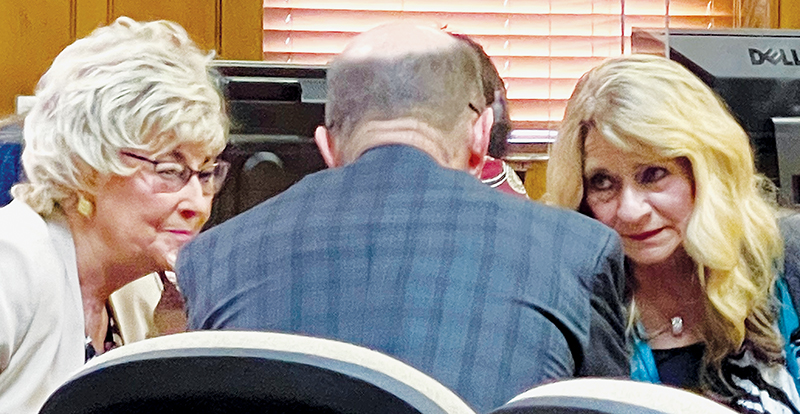
During the hearing in Graham County Superior Court in Robbinsville on Monday, lawyers for both sides made arguments in county’s request for summary judgment allowing it to take possession of the building.
Asheville-based lawyer Dale Curriden of the Van Winkle Law Firm was hired to represent the county. He argued that Smoky Mountain Urgent Care was in breech of three contracts with the county:
* The clinic failed to maintain operating hours as specified in one contract;
* The clinic failed to operate diagnostic imaging equipment as specified in another contract;
* The clinic failed to provide medical services to the Graham County Jail as specified in a third contract.
Sylva-based lawyer Kimberly Carpenter of the Carpenter & Guy law firm – representing Castor – argued that Smoky Mountain Urgent Care stopped complying with the imaging and jail service contracts following the county’s eviction notice, but had been mostly in compliance with required clinic operating hours once it was put on notice that the county wanted to evict it.
She wanted the judge to treat the three contracts as separate issues, one of which the clinic was more or less complying with.
Curriden wanted the judge to treat the three contracts as a single issue, but regardless, he said the clinic was in breech of all three, any one of which entitled the county to evict it. In the end, it was his arguments that swayed the judge’s decision.
Present at the hearing were Connie Orr – chairman of the Graham County Board of Commissioners – and Juanita Colvard, who runs the county transportation department and who earlier helped the county apply for a certificate of need from the state to allow imaging equipment and a Golden Leaf Foundation grant that paid for it.
The Graham County Board of Commissioners met in an emergency closed session later Monday following the judge’s ruling to discuss the case. Specifics of what was discussed during that meeting were not made public.
Background
In 2015, Graham County sought a Golden Leaf Foundation grant to pay for a CT scanner, 3D ultrasound and mammography – nearly $1 million worth of equipment – but needed a facility and staff to house it.
The county moved its health department out of a building at 21 S. Main St. and upgraded it to house an urgent care clinic, diagnostic imaging and a dental clinic. Castor – who operated urgent care clinics in Bryson City and other surrounding counties – was approached to help the county obtain the certificate of need and grant, and to run the urgent care clinic and diagnostic imaging.
Castor signed a lease for the building in 2018. The clinic was up and running before the imaging equipment was acquired.
The lease allowed him to use the building rent-free for the first 10 years with low-cost options following that 10-year period. He and his family were also added to the county’s health insurance plan.
The lease agreement required the clinic to be open from 9 a.m. – 7 p.m. Monday-Friday, and 9 a.m. – 3 p.m. on weekends, if feasible.
A contract to operate the imaging equipment was added in December 2019 requiring him to pay the county 25 percent of proceeds.
The county alleges that it started receiving complaints from patients in summer 2020 that the clinic was not open during its posted hours and that the imaging equipment was not always available. County officials – including Orr and Commissioner Dale Wiggins – met with Castor to discuss the issue.
They found that the clinic had scaled back its hours, closing an hour earlier than required and that the diagnostic imaging equipment was often unstaffed and unavailable.
The inconsistencies continued until November 2021, when the county sent Castor an eviction notice giving him 90 days to close the practice.
Castor filed a lawsuit just before the deadline in February to vacate the facility and obtained a restraining order against the county.
The county has been silent about the case, outside of court filings. It is unclear who would operate the clinic once Smoky Mountain Urgent Care vacates the building.
Carpenter – the clinic’s lawyer – said most of the clinic’s staff of physician’s assistants, nurses and clerks live outside Graham County, which creates a problem when roads are impassible because of inclement weather. The clinic also claims that COVID-19 resulted in staffing shortages, which would happen no matter who operates the facility.
The imaging equipment is an even trickier problem, given the higher level of expertise and certification required of operators.
But Curriden – the county’s lawyer – pointed out that during times when Graham County’s clinic was closed, other Smoky Mountain Urgent Care clinics stayed open.
As for the imaging equipment, the agreement makes no provisions for the volume of use.
“On the flip side,” he said, “the requirement was to use it more than zero and zero is what is happening now.”