
Couple applies generational gardening experience
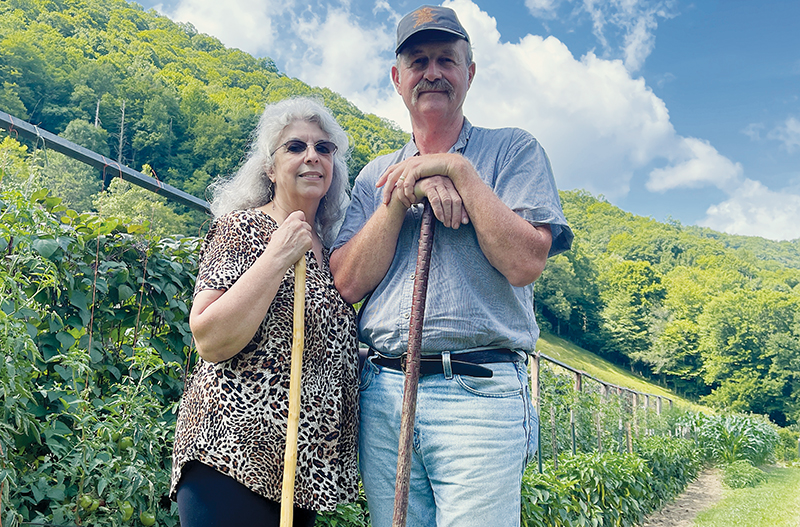
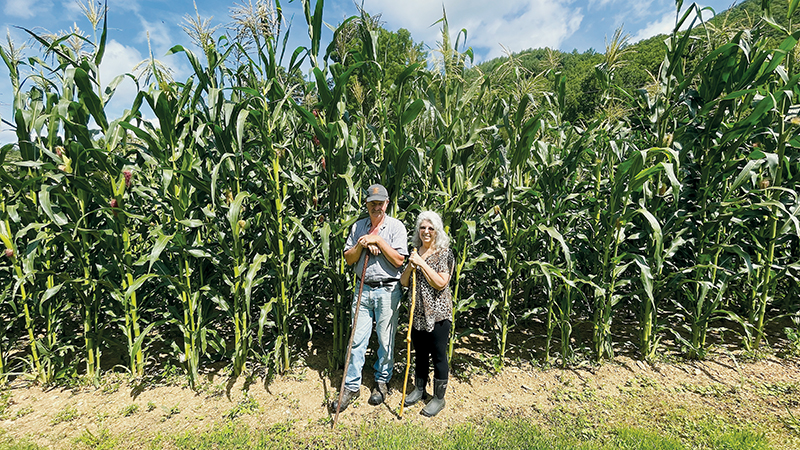
Sweetwater – Harold and Brenda Williams are surrounded by relatives, past and present, on property that has been in the family since 1893.
Harold’s great-grandfather brought his bride over Franks Creek Gap – her things on the back of a mule – and built a rough mountain farm beside Beech Creek Road, where they raised 11 children along with crops, cattle, horses, sheep and hogs.
Harold is the latest Williams on the Beech Creek ancestral property. Their daughter, Amber Benton (who is the program director at Stecoah Valley Cultural Arts Center) and her husband David own property just up the road. His sister owns adjacent property.
Harold spent his childhood in Gaston County – where his family worked in the textile industry – but he spent his summers in Graham County helping tend land and livestock – for his family and his neighbors.
“I cut tobacco, hay – anything to make a little money,” he said.
One summer, Brenda caught Harold’s eye while he was helping her father. Brenda lived past Locust Cove Gap toward Stecoah and was best friends with Harold’s sister. As soon as he was of age, Harold moved to his grandparent’s land and when he was 19, married 17-year-old Brenda in a simple ceremony at her father’s house.
“It was me, her, the preacher, her mom and dad,” Harold said.
They celebrated their 48th anniversary in September.
Harold worked at the Burlington furniture plant for 25 years, before shifting gears and working with the N.C. Department of Transportation for another 20 years.
Brenda was laid off from three local jobs in 2 ½ years. She had enough of that and decided to go back to school. She obtained two grants that enabled her to attend community college in Peachtree, then went on to a four-year degree (in 3 ½ years) from Western Carolina University.
She taught chemistry, biology and earth sciences at Robbinsville High School for a short time, until the school needed an art teacher.
So she went back to school for another three years to get a credential for that, attending classes after hours. She divided her time teaching science and art before switching to art full-time. She later earned a master’s degree from East Carolina University.
Both Harold and Brenda are multi-talented. Harold sits on his porch picking at his banjo. He works leather. He tinkers with the old house that he inherited where he installed hot water among other amenities that were less common when it was built nearly a century ago.
Brenda paints watercolors and draws, adept at both landscapes and life scenes with a style that blends her formal training in art and the sciences.
The garden
Most of the Williams’ acreage is wooded or grazed. There’s a barn that Harold built and what remains of their honeymoon cottage. A primitive foot bridge crosses the creek to where their garden is nestled.
These are no mere amateur gardeners. Growing things is in their DNA and their family heritage. Together, they tend a 3/10-of-an-acre plot on land that has been gardened since it was first prepared by a horse-drawn plow more than a century ago.
Each morning, they make their way down their front porch steps carrying matching walking sticks, down one steep embankment, across a narrow footbridge, up the other side, through a hand-made iron gate and into their verdant garden.
They blend knowledge from their ancestors with a more modern, holistic approach to growing crops. They look for non-chemical, mineral-based solutions to controlling weeds and insects. Mounted on a fence post is a Starlink Internet receiver. Corn towers over them, row after row of 10- to 12-feet-tall stocks. Past generations have been known to turn the corn into moonshine whiskey, but this generation of Williamses grow crops for eating, not drinking. This year’s crop includes peppers, tomatoes, beans, two varieties of corn, squash, cucumber, zucchini, potatoes and probably some other crops that just didn’t come to mind during a recent interview.
The rest of the property is well-tended, with flower beds beside the front porch.
Brenda’s Facebook page shows the fruit of their labor – picture after picture of freshly-harvested produce, as well as jarred, pickled and preserved vegetables.
The photos are gorgeous and mouthwatering – worthy of her attention, should she decide to paint them.