
Local man seeks alternatives for nearly two-decade illness
Aron Wehr’s 18-year battle with multiple sclerosis may not be over, but there is an 80-percent chance that he has stopped the disease’s progression in its tracks.
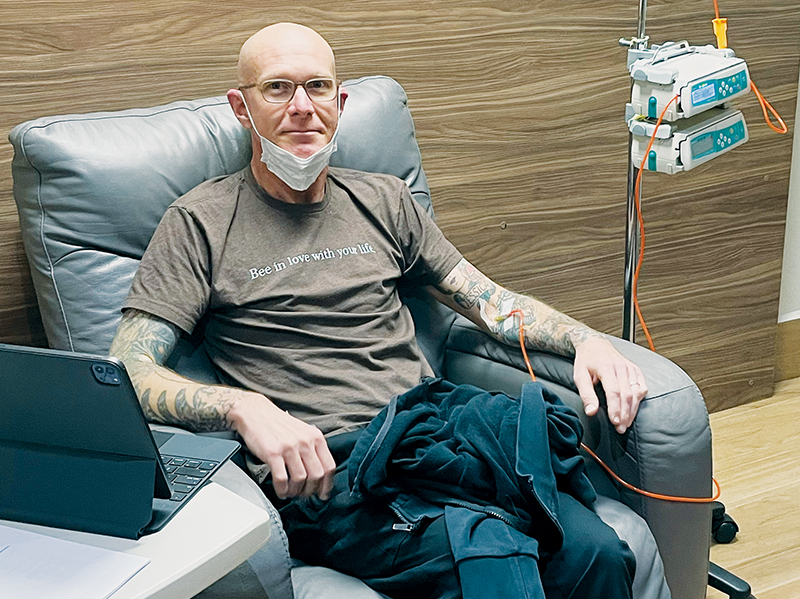
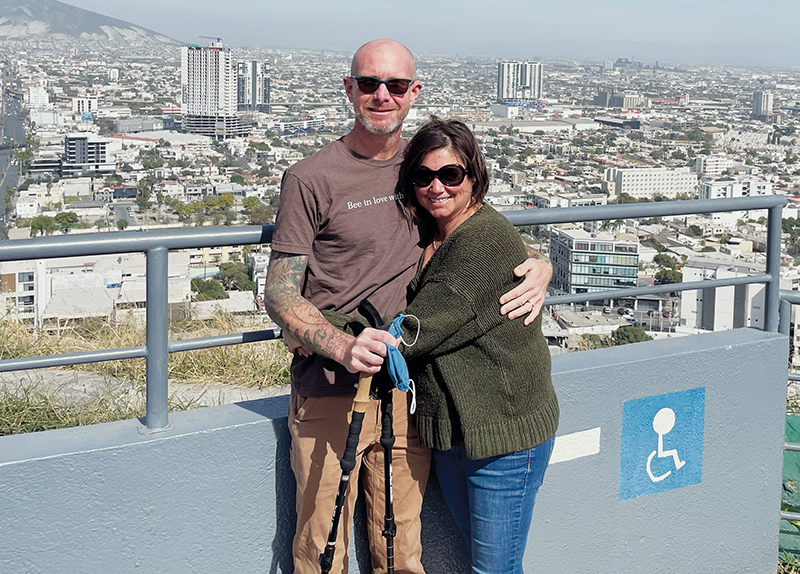
In January, Aron and his wife Jessica left their home, their two daughters, family members and their business in Graham County, and made the trip to Monterrey, Mexico, to begin a unique method of treatment for multiple sclerosis called Hematopoietic Stem Cell Transplant. The stem-cell transplant includes an intense chemotherapy, aimed to stop the damage multiple sclerosis causes by wiping out the immune system and then allowing new cells to replace the damaged ones.
Aron had realized that his health was deteriorating quickly and within a year, he would more than likely be in a wheelchair. He had reached the point in his disease that it was an effort to just take part in the daily lives of his wife and children. He could no longer accompany them on shopping trips, hiking and other activities the family had once enjoyed together.
New horizons
After extensive research, he applied for U.S. clinical trials for the stem-cell transplant.
When he didn’t qualify for these trials, he decided to travel outside of the country.
The procedure is offered in other countries around the world, but Mexico was chosen because of the easy accessibility. However, outside of the United States, the opportunity to supplement the cost with insurance was nonexistent. The procedure was expensive, but time was an important factor in receiving treatment.
For the first time in a very long time, they had hope for what Aron’s health and future would look like.
Bumps in the road
Aron’s journey with multiple sclerosis began in 2005, when he began experiencing numbness in his hands.
Being an artist, he was instructed to wear wrist braces and change the way he held his paint brush.
The symptoms continued to come and go over the years, however.
In 2013 – during a bout with the flu – he realized there was something very wrong when he began to lose mobility. Every time he became ill, his condition worsened. Unfortunately, he would not receive a diagnosis for several more years – even though he visited medical facilities and numerous doctors.
In 2019, after ten years of misdiagnosis’ – ranging from carpal tunnel syndrome, celiac disease, and Guillain-Barre syndrome – Aron was undergoing an annual health exam at urgent care when a local nurse practitioner ordered an MRI to determine the identity of his health issues.
During the MRI, the technologist noticed active lesions in his brain – multiple sclerosis.
Multiple sclerosis is an autoimmune condition where the myelin sheath used to protect nerve fibers in the central nervous system attack and destroy the nerve fibers instead. This leaves the areas of electrical impulses between the brain and other parts of the body compromised, when the scar tissue caused by lesions in the brain begin to harden.
Uphill battle
Once he received the diagnosis, Aron decided against the drugs used to treat the disease, because of the side effects and began his own path of natural healing. He eliminated diary, gluten and sugar from his diet – because of their contribution to inflammation – and began a very restrictive diet and homeopathic regimen.
He learned to maintain his symptoms, but they were never resolved. He began a rollercoaster of symptoms that would come and go, worsening each time he became ill.
In December 2019, he became sick and ended up in the hospital paralyzed. He had no mobility at all. He was diagnosed with an upper respiratory infection and was given a heavy dose of steroids and his condition began to improve. The recovery took three months to regain his previous health status, but he worked hard to get his mobility to return.
In October 2020 – as COVID became rampant in the county – Jessica – then a 6th-grade teacher at Robbinsville Elementary – became ill with the virus and unfortunately, Aron contracted it as well. Jessica took him to Mission Hospital in Asheville, where he was placed in isolation.
Aron’s condition began to improve; however, his mobility had been compromised. He recovered, began balance training and physical therapy, but he never fully bounced back from this episode.
In April 2021, Aron traveled to the Atlanta Neuroscience Institute and started the Ocrevus infusion, which is administered twice a year in an attempt to slow the progression of the disease. For the next two years, subsequent doses of the Ocrevus seemed to be less effective. He continued the treatment until February 2022, when an MRI revealed that his brain showed less active lesions, which indicated he was doing better.
The reality was that he was not. The rate of progression did not allow much room for optimism.
Stem cell option
The Wehr’s had done their research and stayed up to date on all the latest treatments for multiple sclerosis.
They had been hearing and reading about stem-cell treatment for a couple of years, but it was hard to find valid information and was not being practiced outside of the trial groups in the United States. They realized that treatment outside of the country would be expensive and risky.
Aron began extensive research and taking in all the information he could gather. He chose to undergo the procedure, when a friend in the pharmaceutical industry told him he needed to research the treatment and encouraged him to consider it.
The more he learned about the treatment, the more convinced he became that Hematopoietic Stem Cell Transplant was the only practical solution.
After making the decision, he asked Jessica to be his caretaker, which would require her to travel with him – leaving her children, her family, her job, the family business and home behind for a month.
Of course, she said yes.
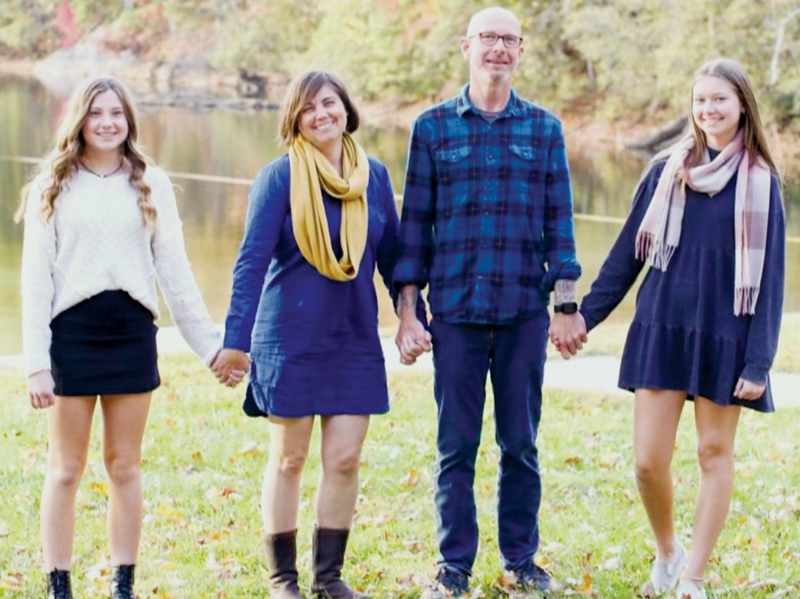
Aron and Jessica’s parents, siblings, family members and friends stepped up to the challenge of caring for their teenage daughters and keeping everything at home as normal as possible.
On Jan. 8, they left Robbinsville with optimism and full hearts, and began their Hematopoietic Stem Cell Transplant journey.
Crossing borders
The visit to Mexico was not an easy one, with many medical procedures to complete the Hematopoietic Stem Cell Transplant, long hours of treatment, nausea and a little homesickness along the way.
The Wehr’s were blessed to have an apartment with an amazing view, a support group of two other patients and caregivers on the same treatment timeline as Aron, a competent medical staff and Aron’s tenacity to stay focused on the end result.
Thanks to The Graham Star, their daughter Abby’s varsity basketball games were live-streamed and they were able to watch her play. Family and friends took care of everything back home, so that Aron and Jessica could focus on his health – and it seems to be paying off.
Aron and Jessica are back home in Graham County with their family and he is doing well in recovery. The process takes about a year to confirm; however, Aron is optimistic that the decision to undergo the transplant was the best one for him and his family.
Aron calls Jessica his angel. Their journey has been documented on Facebook.
You can follow his progression and read his complete story on their Facebook page, Aron’s HSCT Journey.
For more information about the transplant, go to astemcelljourney.com.