
* Editor’s note: In March 1993, Marshall McClung was working for the U.S. Forest Service when a snowstorm unlike any other seen in the Southeast swept across the region. This is his account of the impact the storm had on Graham County.
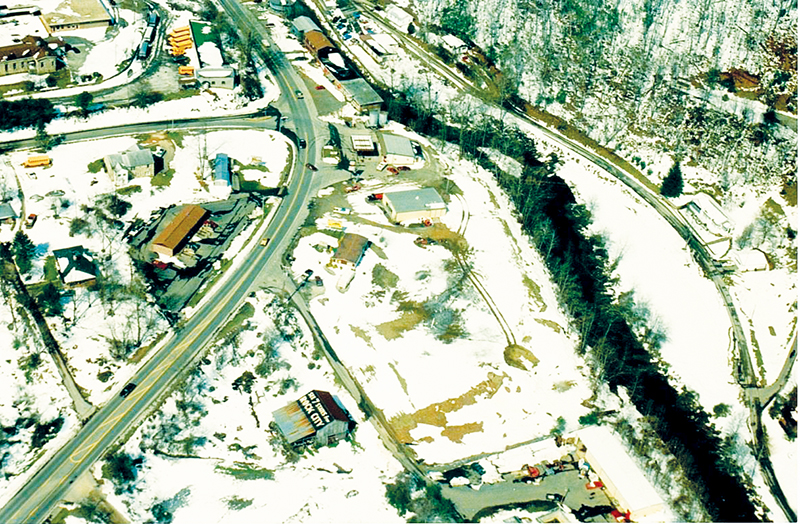
Even though it has been 30 years since the “Blizzard of ’93” struck Graham County, it made such an impact on people that it still comes up in conversations from time to time.
Just the mention of it and people can tell you what all they went through, how long they were out of electrical power, how deep the snow was in their yard and other memories.
The snow started falling on Friday, March 12 and continued to snow into Sunday, March 14.
I was in Robbinsville around noon March 12 and saw the snow working its way down the mountain from Joanna Bald. Soon, it was snowing in town with the largest snowflakes I had ever seen. It looked as if large white feathers were falling.
I was employed by the U.S. Forest Service then and that afternoon, I talked on the phone with several groups of hikers who were planning to come to Graham County for the weekend. Most of them were intending to go into Joyce Kilmer Forest or the Slickrock area. I told them we were getting heavy snow and that it would be difficult for us to reach them should they need rescuing.
They came anyway and had to be rescued.
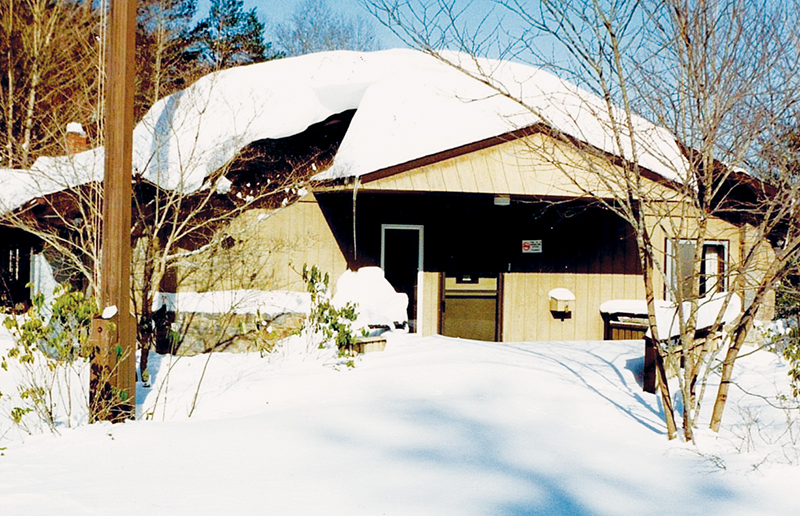
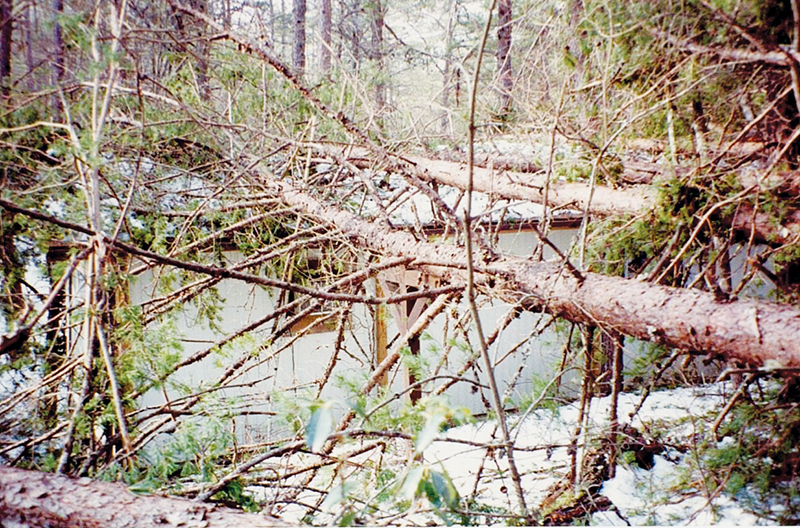
In a short period of time, snow was already over two feet deep in much of the county. The snow was 28 inches at my home by around 5 p.m. Electrical power and telephones began to go out all over the county, as large trees and limbs fell on utility lines. It was weeks before power was restored in the more remote sections of the county.
Roads became impassable, as the heavy snow continued to fall. It became too much for N.C. Department of Transportation snow plows and motor graders to handle. At this point, the snow at my home measured 38 inches, with a drift in the driveway that was up to my waist.
I knew that a lot of people needed help, so I attempted to go out to assist. My 4-wheel drive truck went the length of its self and stopped, high centered by the deep snow. My neighbor Freddie Anderson plowed our driveway with a farm tractor without being asked and refused any pay. Someone else had plowed Hares Creek Road with a dozer. I was able to walk out to the main road, where James Lewis picked me up and brought me to Robbinsville.
People all over the county were involved in “neighbor helping neighbor” activities. I understand that Jim McGuire plowed roads in the West Buffalo area. I am sure there were many such happenings all over the county. The National Guard was brought in to assist – and its Humvees kept getting stuck in the snow.
Members of all local rescue squads and fire departments in the county; as well as federal, state and local agencies, power company crews, telephone company crews, and countless individual volunteers combined their resources to assist in recovery operations. The Graham County Courthouse was used as a command post.
At first, I was part of several U.S. Forest Service chainsaw crews involved in clearing trees from roadways. Hoot and Virginia Gibbs – and myself – made up one of the crews. Electrical power officials wanted Cross Creek Road cleared, to gain access to a high-voltage transmission line.
From the intersection of U.S. 129 to the entrance to the Cross Creek development, we cut 33 trees out of the road. We then cleared Yellow Creek Road up to the last house – and just cleared one lane. From there, we cleared U.S. 129 from Yellow Creek to Deals Gap, where we were met by a department of transportation crew that had been clearing N.C. 28.
The National Guard, Tennessee Valley Authority and the U.S. Forest Service each provided a helicopter, to assist in rescuing stranded persons especially hikers in the woods. There was no other way to reach them except from the air.
Hoot Gibbs and I were trained helicopter-base managers – having worked helicopters on large wildfires before – so we were asked to manage the helicopter operations by the county. The parking lot across from the football field and gym was used as a base of operations.
On one flight, the pilot radioed us that there was a tent on Stratton Bald, and that two members of the rescue crew were going to rappel down and see if anyone was in it. He called back to say that the men had disappeared in the snow that it was over their heads and estimated to be about eight feet deep.
Fortunately, there was no one in the tent.
Several hikers had made it out of the woods to trailhead-parking lots, only to discover that they still could not get out due to the deep snow. When a helicopter came over these parking lots, crews would see “SOS” stamped out in the snow, bright-colored objects tied to car antennas, and people jumping up and down and waving their arms. Before the helicopter operations had ended, a total of 57 hikers were rescued from the Joyce Kilmer Forest, Slickrock and the Appalachian Trail, and over 100 from the Great Smoky Mountains National Park. Some of the hikers were suffering from frostbite and lost tips of fingers and toes.
There were numerous acts of kindness reported locally, of volunteers delivering food, medicine and fuel to the many homebound residents. A lot of people placed themselves in harms way to assist those homebound for days.
Many said they felt that God had showered blessings on Graham County, as there were no deaths from the blizzard.