
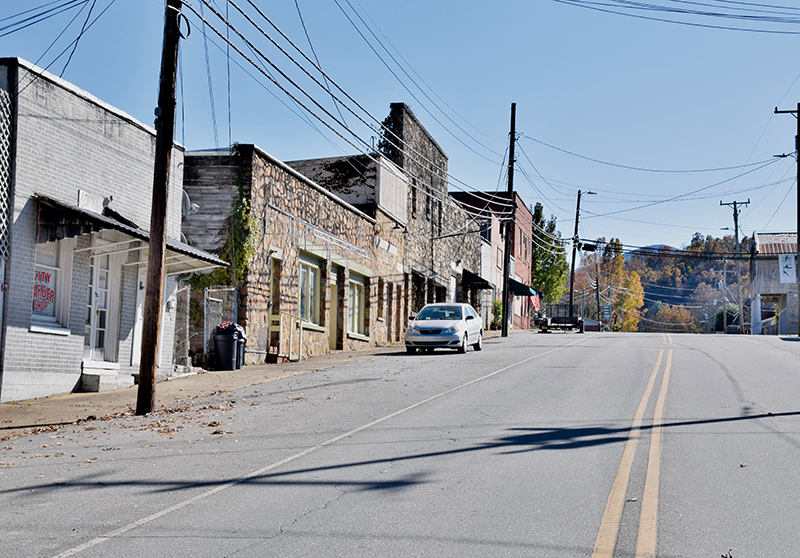
Robbinsville – Historic preservationist Sybil Argintar met with local officials and citizens Oct. 29, to explain the on-going process of trying to put downtown Robbinsville on the National Register of Historic Places.
Hired by the town to work toward the historic designation, Argintar began surveys in spring, met with the Graham County Historical Association and is collecting oral histories, all as part of the nomination process.
The National Register of Historic Places is a National Park Service program started in 1966 to list “the Nation’s historic places worth of preservation” and “coordinate and support public and private efforts to identify, evaluate, and protect America’s historic and archeological resources.
In North Carolina, approximately 2,900 properties have been nominated for the registry.
Graham County has seven locations on the list: Snowbird Mountain Lodge, Tapoco Lodge, the Charles Noden George House, the Cheoah, Fontana and Santeetlah Hydroelectric developments and the Graham County Courthouse.
The process of acquiring the historic designation is an arduous and time-consuming slog. Argintar – who has 34 years of experience in historic preservation – has worked in the western North Carolina towns of Brevard, Hendersonville, Black Mountain and Waynesville. Prior to nominating downtown Robbinsville, she must document the history and architecture of the designated area, which would include the length of Main Street and possibly cross-over onto Junaluska.
The benefits of such a designation include the preservation of the area. For example, any future road-widening projects would have to steer clear of downtown. With the designation comes the opportunity for tax credits, both for commercial property owners who rehabilitate their buildings and homeowners living in the designated area.
“Historic designation does not in any way restrict your property rights,” Argintar stressed. “All it does is document history and architecture. The only possible restrictions come with the tax credit programs, which are entirely optional.”
Being on the National Register of Historic Places also opens up the possibility of obtaining grants for projects such as the long-awaited museum on Main Street.
“The National Register of Historic Places designation can encourage people to come back downtown,” said Argintar. “It can draw people back to Main Street and that can really help revitalize a community.”
Argintar’s expects to complete her survey work by mid-December and make the nomination in 2020.