
While the U.S. Census Bureau's main objective is to count the population every 10 years, the agency also tracks our well-being through the American Community Survey.
According to Office Chief Donna Daily, "This information provides an important tool for communities to make data-driven decisions, access the past and plan for the future."
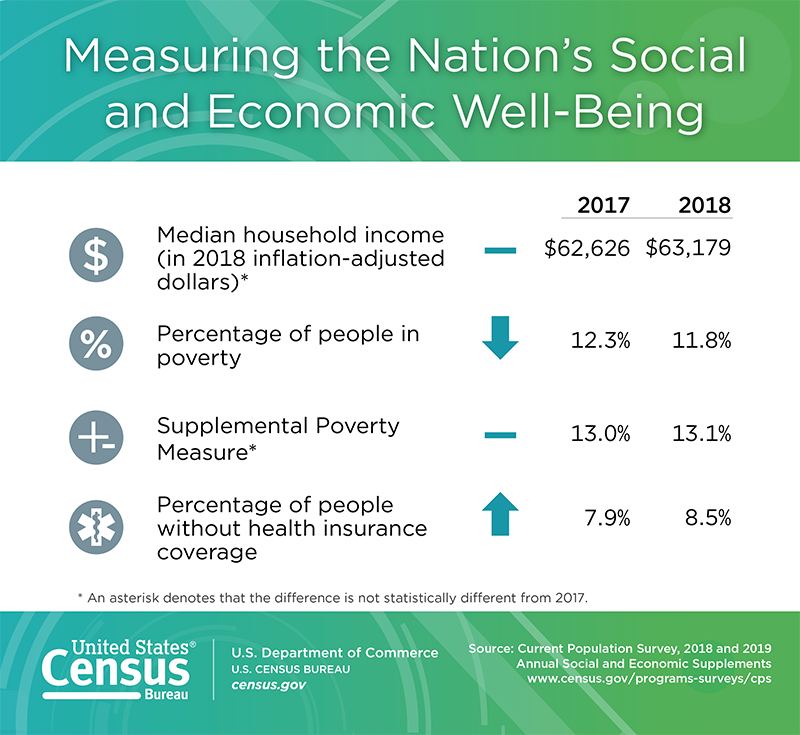
The survey studies a number of demographics, including changes in income, poverty and access to insurance. The bureau released a slew of 2018 statistics Sept. 26, indicating that on the national level, income is up and poverty is down, but the number of uninsured is rising.
The national income level saw a rise of 0.8 percent, making 2018 income the highest ever measured by the American Community Survey.
While the poverty rate decreased nationwide by 0.5 percent, southern states did not see such a decline, with the region's poverty rate measured at 13.6 percent, the highest in the nation.
North Carolina was the outlier, with with a poverty rate continuing to decline for the fifth year in a row. According to the Census Bureau, the nationwide poverty rate continued to decline due to two main causes: "Social Security continued to be the most important antipoverty program, moving 27.3 million individuals out of poverty. Refundable tax credits moved 7.9 million people out of poverty."
Nationwide, the rate of those without health insurance increased by 0.5 percent over 2017, which translates to 27.5 Americans without coverage. This marks the first year-to-year increase in the number of uninsured since 2008-09. North Carolina's rate of uninsured is the ninth-highest in the nation.
Details can be found at census.gov.