
“No matter the day, no matter the weather, no matter what else was happening in the world, I was sure of this: cracklin’ cornbread and pinto beans with fat back would always be found in her house.”
Malinda Dunlap Fillingim’s ode to the pinto bean, “A Pot of Hospitality,” described her step-grandmother’s Stokes County kitchen, but an ever-present offering of pinto beans and cornbread is familiar to many a Southerner.
Long a staple of the Native American diet, a means of survival between harvests and part of the triad of winter squash, maize and climbing beans known as “The Three Sisters,” the pinto was quickly adopted by European settlers. Currently the most popular bean in the United States, the pinto is also well-loved across the globe.
Grown in China, India, Indonesia and Brazil, the pinto beans’ biggest harvest is still in the United States. According to the USDA, American farmers produce more than 1.2 billion pounds of dried pintos per year, with 20 percent of those beans being shipped overseas.
Whether called pinto beans, soup beans, cowboy beans or frijoles, this variety of Phaseolus vulgaris – or common bean – has the most fiber of any bean. This makes it a tool in lowering cholesterol as well as preventing blood sugar levels from spiking after a meal, a huge favor to those with diabetes, insulin resistance or hypoglycemia. The bean is rich in protein, folate, and manganese. The pinto is also a good source of vitamin B1, phosphorus, iron, magnesium, potassium, and copper.
The pinto bean is not merely nutritious: it is known for being particularly delicious.
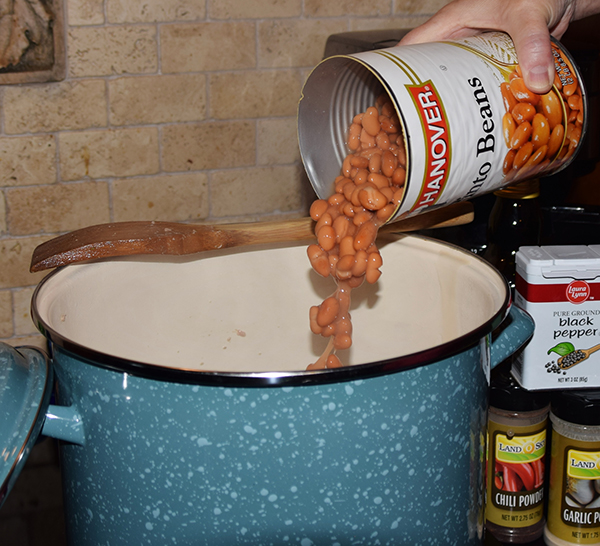
Soaked overnight, then boiled with some form of hog fat – either in the form of fatback, bacon or ham hocks – a big pot of pinto beans is a savory staple year-round, but particularly popular during winter.
Convention dictates the chef add one more step before serving.
“Pinto beans are one of those things that is better the second day,” said Graham County resident Susan Breland Ivey.
The science behind this claim is unproven, but any pinto bean connoisseur knows it to be true.
Good-tasting and good-for-you, the pinto bean – once dried – is also nearly indestructible, which made it an ideal staple during long, cold Appalachian winters as well as for those venturing far from home.
“To tell the truth, I don’t know how we’d have made it through the winter without pinto beans and cornbread,” said 92-year-old Haywood County native Jan Myers. “Beans and cornbread was on the table nearly every day. That’s just how we got by on hardly nothing.”
Long known as “the poor man’s meat,” the humble pinto is now one of the world’s most popular beans. With worldwide harvests increasing every year, the appetite for pintos only seems to be growing.
Perhaps Appalachian guitarist, Doc Watson, said it best: “If I ate twice what there was, it would’ve been half what I wanted.”