
*Sixth in a series
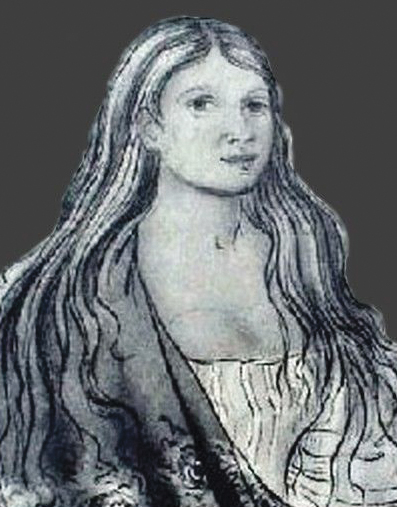
Beloved Cherokee woman Nanye’hi.
While traveling through Cherokee lands in 1767, a Spaniard named Solis wrote in his diary of “an Indian woman of great authority and following whom they call ‘great lady.’”
This “great lady” was the Cherokee Beloved Woman Nanye’hi – or One Who Goes About – who by 1767 had established herself as a leader, diplomat and advocate for peace.
Born in 1738 in Chota – near present-day Monroe County, Tenn. – the young Nanye’hi was known by her nickname, Tsistunagiska – or Wild Rose – but she was soon to earn another name: War Woman.
At the age of 17, Nanye’hi accompanied her husband, Tsu-la – or Kingfisher – on a raid against the Muskogee Creeks. She was initially in charge of supplying her husband with ammunition, chewing the lead bullets to a more lethal point with her own teeth, but after her husband was killed, Nanye’hi grabbed up his weapons and led the Cherokee in a charge that brought them victory.
Soon after this battle, the teenaged widow received the title of Beloved Woman, giving her a lifelong voice at tribal councils, the right to head the Women’s Council, a seat on the Council of Chiefs and undisputed authority over all prisoners. The Great Spirit was thought to speak through her, so her voice was not to be ignored.
Within a few years, Nanye’hi married Bryant Ward, an English trader who had lived among the Cherokee for many years. She had a daughter with him, learned the English language and adopted the English name of Nancy Ward. She soon became the first known Cherokee to own and raise cattle, introducing dairy consumption to her tribe. While running her family farm, Nancy Ward also represented her people in dealings with white settlers.
Having lived her life in a constant state of war, Ward became an advocate for peace and she sided with American revolutionaries against the English. Her presence in negotiations with whites was sometimes questioned, but as her maternal uncle, Attakullakulla said, “Since the white man as well as the red is born of woman, why does not the white man admit women to their councils?”
In 1781, Ward led negotiations with the new American nation, saying that, “You know that women are always looked upon as nothing, but we are your mothers. You are our sons. Our cry is all for peace. Let it continue. This peace must last forever. Let your women’s sons be ours; let our sons be yours. Let your women hear our words.”
As a result of Ward’s negotiations, the Cherokee retained ownership of some of their lands, though broken treaties continued to eat away at Cherokee territory.
In her old age, Ward became known as Granny Ward, as she took in generations of orphans and raised them as her own. She also ran an inn near Womankiller Ford on the Ocoee River.
When the Cherokee Constitution was ratified in 1819, Ward sent her walking stick and her vote in favor of ratification, even though this meant losing her own authority, as the Constitution accorded no official powers to Beloved Women.
Ward died in 1822 at her home near Benton, Tenn. She is recognized as a Daughter of the American Revolution and in 1994, her descendants formed The Association of the Descendants of Nancy Ward in order to preserve her memory.
Nearly 200 after her death, Nancy Ward remains one of the most revered Beloved Women in Cherokee history.