
Exchange service accepting hosting applications
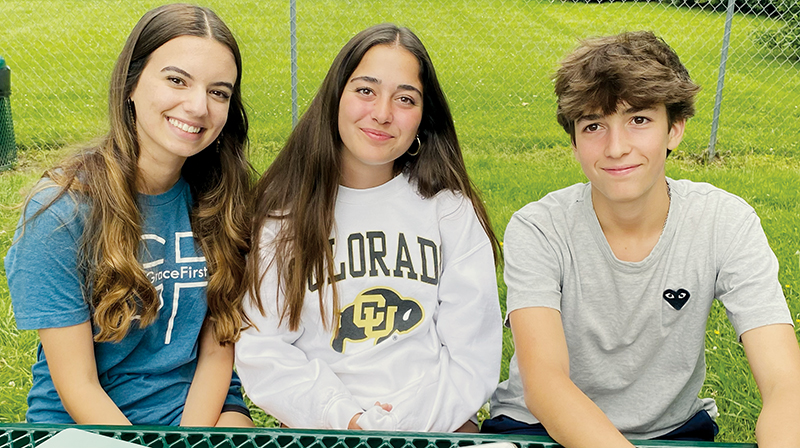
Franklin – When Donna Bell invited an exchange student into her home years ago, she never dreamed it would make such a lasting impact on her family. She discovered a newfound passion for the exchange program and eventually began to work for the company.
Nineteen years later, Bell is still working for the International Cultural Exchange Service (ICES). She serves Western North Carolina and North Georgia, matching families and students for adventures and memories that last a lifetime.
According to Bell, this year there are roughly 350 students in need of host families. It is her mission to educate potential families about the misconceptions of becoming host families.
“Our organization is about building relationships,” Bell said.
Students from Germany, Czech Republic and the Netherlands – to name a few – have enjoyed American traditions such as prom, sporting events and Southern cuisine.
Some have even picked up Appalachian dialects.
Differences in culture have taken some getting used to for the exchange students. Of course, the food is different. An exchange student from Germany says that everything in America is a bit sweeter than it is in Germany. She misses the dark and hearty bread from her country and isn’t too fond of the American bread which is “white and fluffy.”
The choice in clothing is different. Even the relationships between the school faculty and the student are different in America. European schools have such large class sizes it is hard for an educator to learn the names of each student. In Western North Carolina and North Georgia, most educators become close to their students throughout the school year. That has been an important asset to the exchange program as well.
Even though the exchange students take classes at a high school, most of the credits they obtain will not transfer back to their schools at home. They will more than likely spend an extra year to make up the time and subjects lost while in the United States. The students don’t seem to mind and feel that their time abroad has taught them so much it is worth it. European students are also surprised by the lack of public transportation and the distance between places in the United States. They are accustomed to taking public transportation everywhere because it is readily available throughout Europe. Most of the exchange students are used to walking, riding a bicycle, or riding the public transportation. They are surprised that towns are so far apart and that everyone seems to have their own mode of transportation.
There are no school buses in Europe. Students either walk, ride their bicycles or take public transit to school.
The exchange program is open to many types of families. Empty nesters, single parents, and even families with young children at home are all potential host families.
It is important for the host family to know that the students are provided basic needs from their families back home. The parents will provide them with money they need for school, clothing, school lunches, sporting events and/or equipment, and even entertainment. Each student has their own medical insurance as well. The host family is responsible for providing a warm, nurturing family environment with meals on the table and a bed to sleep in.
They can share a room with a child aged 12 or older of same sex or have their own room when possible.
The timeline for hosting can be on a semester schedule, which runs for five months – either in fall or spring – or it can be the 10-month school year from August to May/June.
The exchange student program allows for maturity, as students find themselves more on their own. They tend to see things from a different perspective after exploring new experiences and cultures.
To become a host family, you must first submit an application. The deadline for this year’s hosting opportunities is Saturday, Aug. 31.
For more information, contact Donna Bell by phone, 828-421-8843; or email, dbell@icesusa.or