
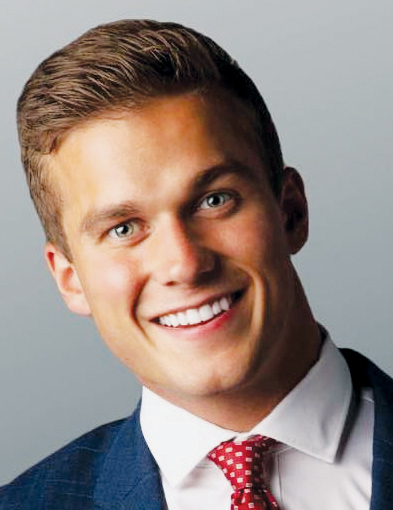
Madison Cawthorn
In a video recorded at a March 5 campaign event, U.S. Rep. Madison Cawthorn (R-Henderson) called Volodymyr Zelensky “a thug,” and the Ukrainian government corrupt and evil.
Faced with widespread backlash – even from among the Republican Party – Cawthorn has recast his stand as more anti-war than anti-Ukraine.
Yet in published reports, Cawthorn continues to call Ukraine “one of the most corrupt countries” because of misinformation Ukraine was spreading that could draw the U.S. into a war.
Critics have equated Cawthorn’s criticism of Ukraine as pro-Russia, or at least blind to Russia’s own corruption and misinformation campaigns, as well as to Russian leader Vladimir Putin’s own reputation as a “thug” on a global level.
Debunking
Active warfare in Ukraine aside, just how corrupt is Ukraine, and is President Zelensky a thug?
First, on the issue of corruption, it turns out that Ukraine is regarded as one of the most corrupt nations in the world, and second most corrupt in Europe – second only to Russia.
In 2021, Transparency International’s Corruption Perceptions Index (a scale of least to most corrupt nations) ranked Ukraine 122nd out of 180 countries (the lower the number, the less corrupt). Ukraine ranked as the second-most corrupt government in Europe, with Russia coming in first.
In Ukraine, voter fraud has been widespread. Bribery is customary and expected. WikiLeaks files showed that under the previous two presidents, Ukraine was described by U.S. diplomats as a “kleptocracy.”
The United States Agency for International Development (USAID) reported that the main causes of corruption in Ukraine are a weak justice system and an over-controlling non-transparent government combined with business-political ties and a weak civil society.
So yes, Ukraine is corrupt – almost in the extreme.
As for Zelensky, is he a thug?
There is no evidence that he has had political opponents killed or incarcerated.
According to the Brookings Institution, Zelensky ran on a reformist platform and initiated reforms early in his term, but has since presided over a backslide. It’s a pattern that has played out several times under previous administrations in Ukraine since its independence from the Soviet Union.
Zelensky was a comedian who had starred in a popular Ukrainian television program, “Servant of the People.” He played a high school teacher who winds up becoming president.
In real life, he was elected president in 2019 after running on a campaign promising to negotiate peace with Russia and reduce the power of corrupt oligarchs.
It should be noted that with a net worth just shy of $600 million (pre-war and in U.S. dollars) and strong media ties in his country, Zelensky could himself be described as an oligarch — defined as a very rich business leader with a great deal of political influence.
Zelensky’s attempt at diplomacy with Moscow snagged over Russian President Vladimir Putin’s demands that Ukraine stay out of Western alliances.
According to Brookings.com, “Zelensky has fired a reformist prime minister and cabinet, replaced a prosecutor general who had begun weeding out bad eggs among prosecutors, and triggered the resignation of a National Bank of Ukraine head who had won plaudits for steering an independent course. Speculation runs rampant in Kyiv that oligarchs are reasserting control.”
True, Russia was the lowest-rated European country in Transparency International’s Corruption Perceptions Index for 2021, ranking 136th out of 180 countries, and President Biden has called Putin a “murderous dictator” and “a pure thug” as Russian troops bomb shelters and schools, among many targets.
But this article’s focuses on Cawthorn claims about Zelensky and Ukraine.
Following Zelensky’s address to Congress, Cawthorn’s office released the following statement:
“The Ukrainian people’s resilience in the face of Russian aggression has inspired the world. The commitment they have shown to the preservation of their sovereign nation is extraordinary. America must, however, not entangle itself in another war or act in a manner that endangers the lives of American soldiers. A war with Russia does not further the interests of America or the national security of the United States. I do not support neocons both on the left and in my party who clamor for war at every chance they get. The scenes coming from Ukraine are both jarring and heartbreaking. But lurching to war or involving American soldiers in this conflict could lead to identical jarring and heartbreaking scenes with American lives. It is possible to augment the efforts of the Ukrainian people in strategic ways, including harsh sanctions on Russia and Russian assets. But emotion should never guide our foreign policy. The United States must be extraordinarily careful to implement logical, rational foreign policy that tactfully strengthens the Ukrainian people while simultaneously putting America first.”