
Washington – As part of planned improvements to the 230-year-old process, Graham County has been chosen as one of the locations across the country to participate in the 2026 test census.
In a press release about the test run, the U.S. Census Bureau said it wanted to focus on "improving the count of hard-to-count and historically undercounted populations."
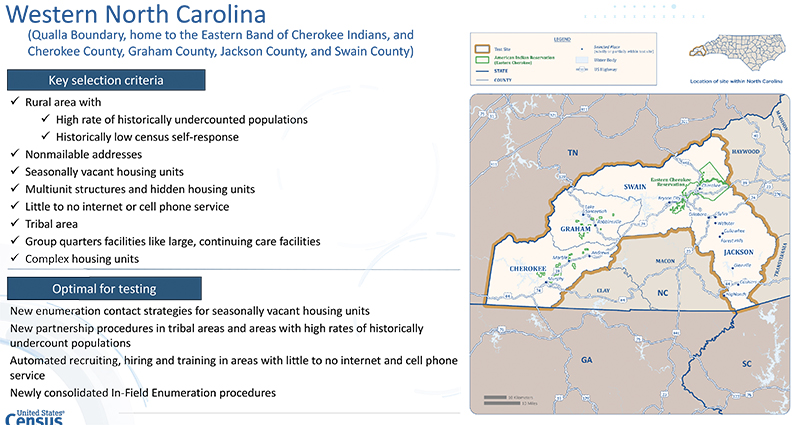
Graham joins Cherokee, Jackson and Swain counties – as well as the Qualla Boundary – as 1-of-6 areas the bureau will focus on during the test, which launches April 1.
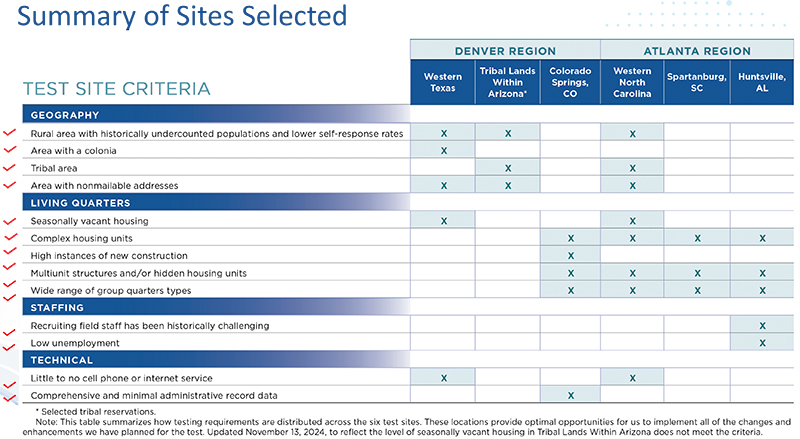
"These locations provide optimal opportunities for us to implement all the changes and enhancements we have planned for the test, under real conditions and on a larger scale than research simulations allow,” said U.S. Census Bureau Decennial Census Management Division Deputy Chief Daniel Doyle. “Together, these sites will enable us to test the improvements we’re designing in our efforts to get a complete count of historically undercounted and hard-to-count populations.”
Other locations that will be participating are metro areas surrounding Spartanburg, S.C.; Huntsville, Ala.; Colorado Springs, Colo.; the Fort Apache and San Carlos reservations in Arizona; and Brewster, Jeff Davis, Pecos and Presidio counties in Texas.
Criteria for selecting the locations was stringent, according to the bureau's release. What brought the areas chosen together was a combination of:
* A high percentage of historically undercounted populations;
* Historically low response rates;
* Tribal areas;
* Rural areas;
* Limited internet/cell phone service;
* A high percentage of households that don't receive mail at their physical address;
* Seasonal housing;
* A high number of multi-unit structures and/or hidden units in urban areas;
* Significant housing growth;
* Universities, correctional facilities, military housing and other types of group quarters.
"It’s important to note that no one location covers all the requirements of this test,” Doyle said. “It’s the combination that’s powerful. As a group, they will enable us to meet all the testing objectives, while also meeting available budget, systems and other resource constraints.”
It is unclear when the second test census will be held.
The 2026 test is expected to conclude by the end of summer. The bureau added that because it is a trial run, no actual data will be published.