
Business allegedly ruined by EBCI grading
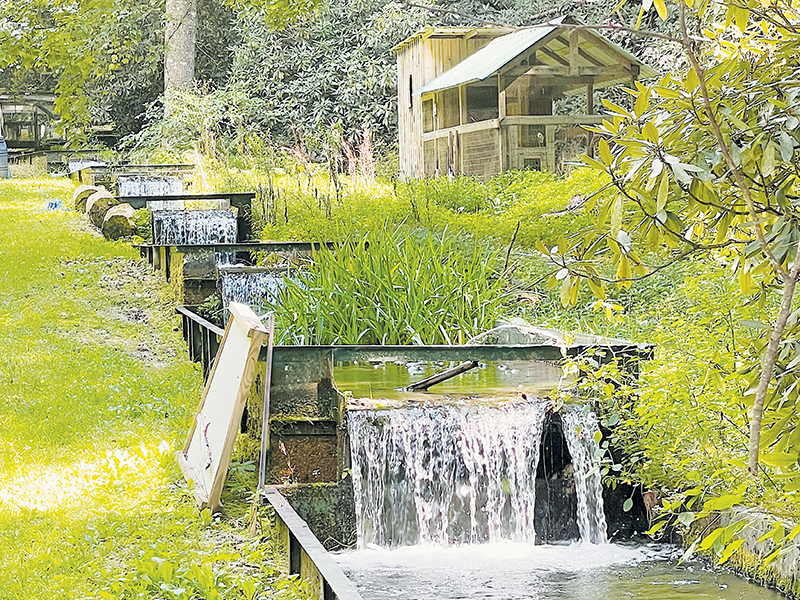
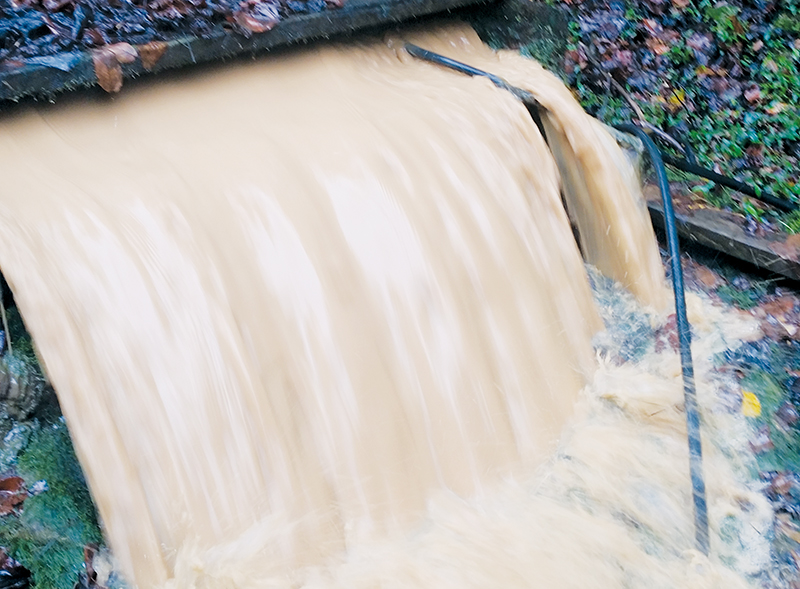
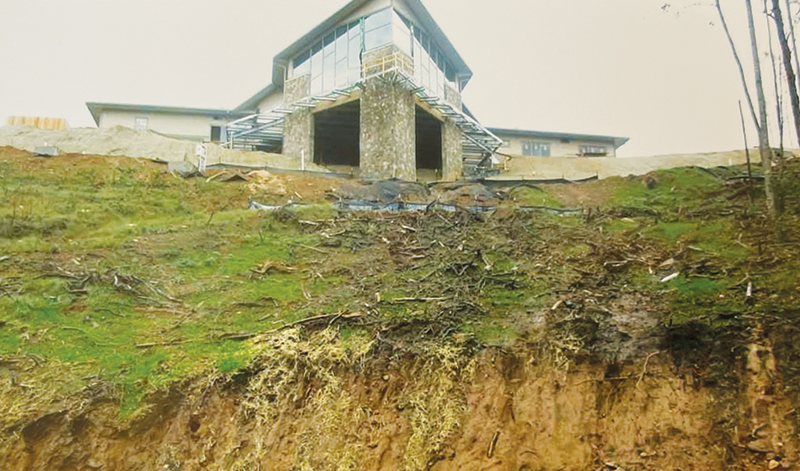
Snowbird – A local trout farm and the Eastern Band of Cherokee Indians are struggling to come to an agreement over allegations that the latter destroyed the business with nearby grading.
Shortly after The Graham Star published an Oct. 13, 2022, report about Duane and Linda Wilkey’s Hunting Boy Trout Farm, the couple attests that a local Realtor reached out and relayed that through the Eastern Band’s Realtor, the couple was being offered $380,000 as a settlement, according to emails obtained by The Graham Star last month.
The Wilkey’s declined.
Eastern Band of Cherokee Indians Attorney General Michael McConnell asked about the lower sum Jan. 10, inquiring about what the couple would take for the loss of compensation after the farm shut down in 2017. The Wilkey’s stood firm at $500,000, a figure published in the Star’s Oct. 13 report.
McConnell told The Graham Star in a Friday email that he would not comment publicly on the matter.
“We are still in communication with Mr. Wilkey and hope that he will continue to communicate with us on the matter,” McConnell said.
The Graham Star obtained a Friday email response from McConnell, saying the Eastern Band would not “entertain” $500,000.
“Our limit is $380,000,” McConnell said to conclude the brief reply.
34 years in operation
Duane and Linda Wilkey operated Hunting Boy Trout Farm from 1991-2017. During the summer of 2017, the Wilkey’s took note of a mud increase coming onto the farm. Initially chalking it up to heavy rainfall, the mud intake only grew from there.
The Wilkey’s account of events – told to The Graham Star in an Oct. 13, 2022, report (“Out of business”) – detail that soon thereafter, the couple traced the source of the
problem ¼-mile upstream of their trout farm to an Eastern Band of Cherokee Indians’ construction project on Cornsilk Branch Road. The building later opened as the Kanvwotiyi Residential Treatment Center, which helps address substance-abuse issues.
The Wilkeys said they visited the site and asked an engineer to address the problem – and was assured it would be, swiftly. Instead, mud flow continued to grow and Hunting Boy Trout Farm went from producing 300,000 fingerlings (juvenile fish) per year to shutting down after a September 2017 shipment, ending a run of 34 years at the site (the farm was originally launched by Don and Ray Moody in 1983; Duane Wilkey is their great-nephew). The location in Snowbird is said to have been chosen for its “pristine” water – an integral component of running a trout farm.
Wilkey bought into Hunting Boy Trout Farm in 1992 and purchased the business outright in 1994. Citing that the work deprived the couple of never having an opportunity to even take a vacation, the Wilkeys have since became dependent on Linda’s income as a hairstylist in Robbinsville; Duane has encountered several health problems that have prevented him from obtaining employment since the farm ceased operations.
Less talk, more action
In the 5 ½ years since, the Wilkeys and Eastern Band of Cherokee Indians have went back and forth on settlement figures.
After the problem was first reported, the Wilkeys say they were informed that both a representative from the Eastern Band attorney general’s office and an insurance adjuster would visit the location and solidify their claim about the nearby grading destroying their operation.
According to the couple, both visiting parties affirmed their suspicion. The Wilkeys were asked to develop a total for losses and submit it to the Eastern Band.
An insurance investigator is said to have interviewed them in the spring of 2018; by August, they were asked to substantiate their claims. The Eastern Band’s insurance company later deemed the couple’s dispute as “dubious,” noting that live trout were present on the Wilkeys’ farm.
The insurance claim was later denied.
“The entire site on Cornsilk is sloped on the Hunting Boy side,” Duane wrote in a summary of events. “Hunting Boy Branch is too small to overcome the effects of temperature gain and pollution coming from the site. Sedimentation will never be stopped entirely due to the severe slope excavated.
“All of this renders Hunting Boy Branch useless in the production of food sized trout and especially fingerlings.”
Despite experts from the N.C. Department of Agriculture & Consumer Services (Franklin-based Debra Sloan) and Headwater Environmental both weighing in that the silt increase was to be blamed on the grading, their pursuit of justice – much like the waters of their farm – began to gradually slow down.
Even the U.S. Environmental Protection Agency’s Atlanta office – which has jurisdiction over the Qualla Boundary – did nothing to resolve the matter.
“The EPA is responsible for implementation and oversight of the National Pollutant Discharge Elimination System program of the Clean Water Act for activities occurring in Indian country, including those within the Qualla Boundary of the Eastern Band of Cherokee Indians,” EPA spokesman Melba Table said, when the Star asked for more information last year.
“Under the NPDES program, construction activities greater than one acre in size generally require NPDES permit coverage while construction activities are ongoing to control the potential discharge of pollutants to waters of the United States. Based on information currently available to the EPA, the construction at the EBCI’s facility ceased in or around 2017, and no ongoing construction activities are occurring that would necessitate permit coverage at this time.”
Duane contends that the EPA never paid him a visit.
71 percent off
Initially, the Wilkeys said they would accept $1,726,032.51, which would cover the purchase of the property and compensate the losses incurred. Cited by Asheville-based attorney Dale Curriden (Van Winkle Law Firm) in an April email to the Wilkeys’ legal representation as a “non-starter,” the tribal council refused to begin negotiations when the opening bid was pitched.
“Tribal Council rejected the idea of a meeting but indicated a willingness to consider purchasing the property at market/appraised value. If the Wilkeys are willing to negotiate in that range, they should propose a price we can take back to Council (and obviously, the more support they can provide for their suggested price – such as an appraisal – the better).”
Through a series of legal discussions with Eastern Band legal counsel – and even its insurance carriers – the Wilkeys lowered their asking price to $500,000 in August.
Emails sent to the Star indicate that McConnell reached out to the couple Dec. 2 and said the Eastern Band is “bounded by your previous, publicly-advertised MLS listing price and the potential sales price you described in the article in (The) Graham Star.”
The Wilkey’s responded Dec. 6 and said with everything in mind, they had decided to consider a $750,000 offer. McConnell said in a Jan. 4 reply that the new proposal was “too much” for the Eastern Band and countered with $350,000.
The gap in response – according to the Wilkeys – ended after an intermediary reached out to N.C. District 120 Rep. Karl Gillespie (R-Franklin) for assistance with the matter.
Gillespie sent an email to the couple Nov. 28, stating that he received a message from the Eastern Band of Cherokee Indians “that they are in communication with the owners.”
In a Jan. 3 email to Gillespie, the Wilkeys thanked Gillespie for showing interest and expressed their frustration with the saga.
“As it has been for almost six years they are avoiding this matter in the hopes that it will go away,” the second-half of the email begins. “This is a pattern that they repeat time after time because they know that they have no oversight. They blatantly ruined our business and walked away because they can. This has created a major financial hardship on us and we have had to use most of our retirement savings to supplement our loss of income.
“Any help that you can give us would be greatly appreciated.”
Gillespie responded the same day, noting that he would pass the frustration along, but noted “(the) EBCI is a solvent nation, so the State of NC has no jurisdiction over them.”
The Wilkeys and Gillespie continued to communicate until Jan. 23, including the Eastern Band’s $350,000 offer for the 19.75 acres of land and the couple’s home. Gillespie apologized for not being able to help further.
Calling the counterproposal of $350,000 “nowhere near acceptable,” the couple resoundingly declined.
“Our property is not for sale unless there is compensation for our business loss,” the Jan. 10 response to McConnell said. “You can call it whatever you like, but we’re not going to let this slide and will continue to pursue this matter.”
In his reply that same morning, McConnell asked the simple question, “If $350,000 is not acceptable, what is?”
“We will need a minimum of $500,000,” the Wilkeys said Jan. 11 in an email with an 11:54 p.m. timestamp.