
Public hearing altered original game plan
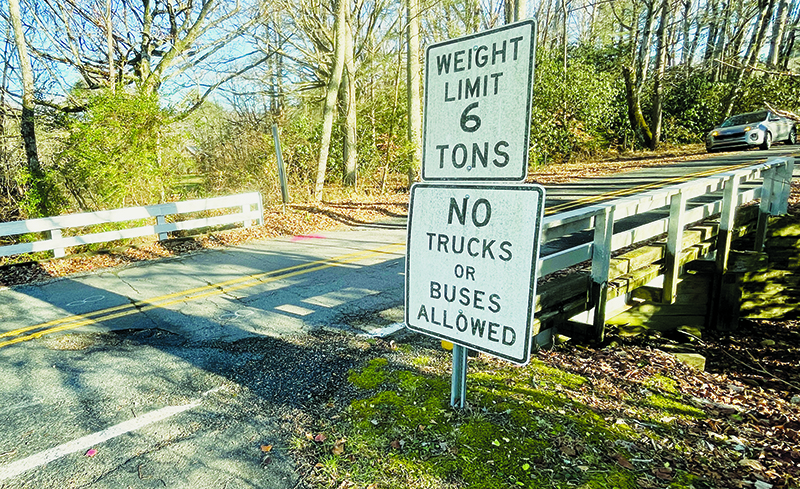
Tallulah – They listened.
Officials with the N.C. Department of Transportation were greeted by a large turnout of opposition to a Nov. 15 public hearing at Robbinsville United Methodist Church, where plans to remove the bridge on Lower Mill Creek Road and craft a pair of dead-end turnarounds were presented to those in attendance.
Around 20 residents flocked to the hearing and in an almost-unanimous voice, asked the state department to consider other options. A Jan. 3 letter from N.C. Department of Transportation, Division 14 Bridge Program Manager Zach Shuler affirmed the alternative: though the cost will be significantly higher, the bridge will be replaced.
“This letter is to inform you that removal of the bridge with turnarounds is no longer proposed,” a portion of Shuler’s letter reads. “The bridge will be replaced and the project team is currently evaluating the appropriate structure to replace the existing bridge.
“We appreciate the community’s input during the public-involvement process. That input has allowed the project team to make informed decisions about the bridge that best serve the citizens in the area.”
Feedback at the hearing included theories about increased drug activity at the turnarounds. Public input about the bridge removal continued through Dec. 16. A culvert in Mill Creek was also considered.
The 0.5-mile road is a loop, connected at the back end by the bridge in question. Despite its minuscule length, several residences are on the circular path.
Perilous existence
Either way, the bridge in place is truly on its last legs. A packet distributed at the Nov. 15 hearing broke down the details of the original plan, which included several terms used to describe the condition of the bridge, which was built in 1964.
Determined to be “at the end of its useful life” – according to the handout – the existing crossing is defined as “functionally obsolete” (narrow, inadequate under-clearances, insufficient load-carrying capacity, or poor roadway alignment) and “structurally deficient.” At the moment, the bridge can handle a 9-ton weight limit for single vehicles and 13 tons for semi-trucks. Lanes are also considered “substandard,” as both are 8 foot wide.
The information packet later said that replacing the bridge to meet current standards was not cost-effective, though the packet did not include an estimate of the price tag attached to the project.
The two turnarounds would have been constructed wide enough to accommodate both buses and emergency vehicles. Right-of-way acquisition would have begun this year, with the removal and cultivation of turnarounds kicking off next year.
The bridge’s design should be approved within the next year, according to DOT David Uchiyama. Shuler can be reached at 828-488-0902 or ztshuler@ncdot.gov.