
Community lays a wreath in honor of Junaluska
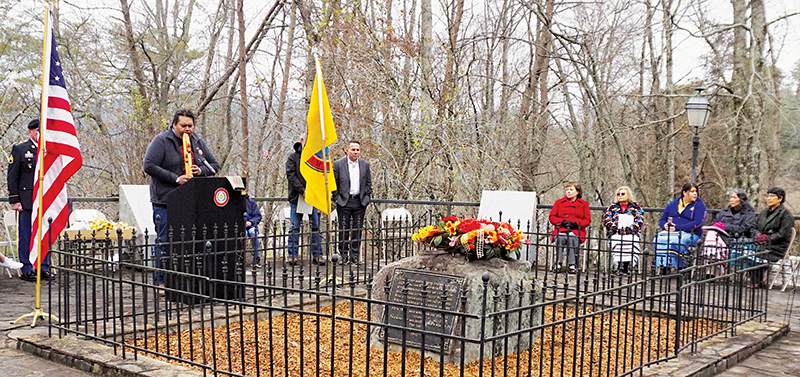
Robbinsville – Dozens gathered on a chilly day for the mostly-annual, wreath-laying ceremony for Junaluska, a Cherokee leader whose gravesite and memorial overlook downtown Robbinsville.
Junaluska is arguably Graham County’s most famous historical leader. A Cherokee, he was born around 1775 and died in 1868. His burial site was originally marked in traditional Cherokee style with a pile of stones. In 1910 – around the anniversary of Junaluska’s death – the Gen. Joseph Winston Chapter of the Daughters of the American Revolution erected a monument at his grave site.
Wreath-laying ceremonies have been held at the site off and on through the years. The Nov. 16 ceremony, marking the 112th anniversary of the monument dedication, was the first in several years due to COVID-19.
A museum at the site was severely damaged during a storm and later razed. The tribe has since acquired acreage between Tapoco Road and the Cheoah River, where leaders plan to erect a larger museum about Junaluska and the Snowbird Cherokee who escaped the Trail of Tears.
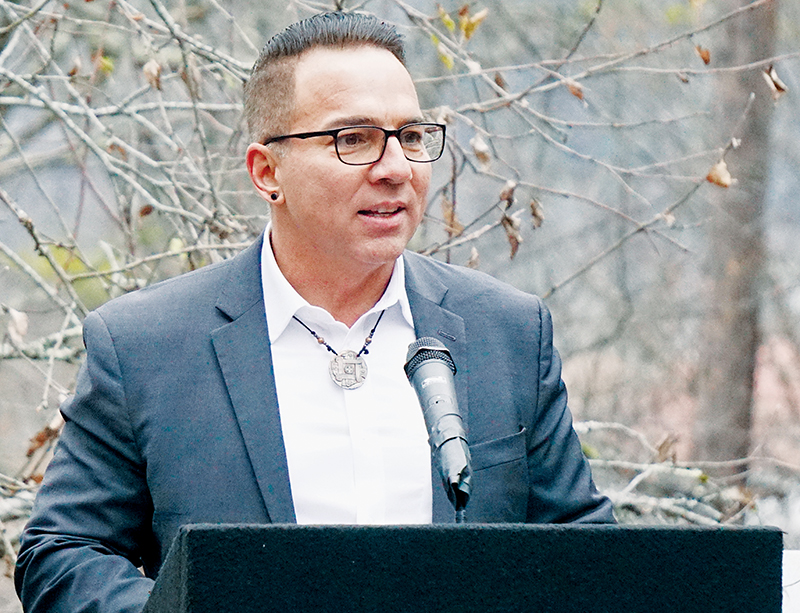
This year’s ceremony included remarks by Principal Chief Richard Sneed, a flute performance by Jarrett Wildcatt, Rebecca Snow Phillips singing “Amazing Grace” in the Cherokee language, along with other performances.
A meal was served at the Graham County Community Building following the ceremony.
In addition to EBCI leaders and members, other dignitaries included Robbinsville aldermen Brian “Taco” Johnson and Debbie Beasley; Graham County Schools Superintendent Angie Knight; and District 120 N.C. Rep. Karl Gillespie.
Junaluska fought alongside then-Gen. and future President Andrew Jackson, reported saving his life at the Battle of Horseshoe Bend during the War of 1812/Creek War. Reportedly later in life, he regretted having done so.
Although he was removed with most Cherokee on the Trail of Tears, Junaluska returned to North Carolina in the late 1840s. The state legislature granted him citizenship and some land near present-day Robbinsville. He was among the Cherokee who lived in North Carolina from the 19th century, and were ancestors to the federally-recognized tribe of Eastern Band of Cherokee Indians, which organized in the 20th century.
Junaluska is buried at the site along with his wife, Nicie.