
Instructor’s dissertation published in journal
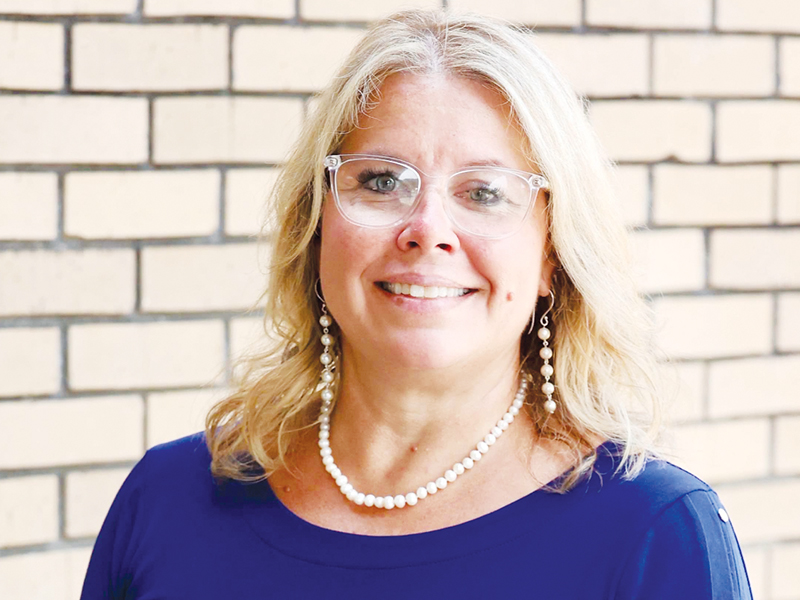
As Jaime Hooper entered the last 10-year mark as an educator at Graham County Schools, she challenged herself to finish well. She didn’t want to find herself with regrets.
“I didn’t want to leave anything on the table left undone. I didn’t want to grow stagnant,” Hooper explained. “Our kids deserve better than that.”
That was when Hooper entered the doctorate program at Western Carolina University. This degree would be icing on the cake to an impressive educational journey.
As Hooper began the doctorate program, she began to explore ideas for her dissertation. Based on her knowledge and experience in educating children who experience poverty, she decided to use that platform to design her doctoral study.
In a society where many believe that low-socioeconomic levels equal low performance, Hooper wanted to share her belief that children can come from generations of poverty – and still accomplish their dreams and achieve greatness. Educators can make the difference in a child’s life – regardless of their social-economic status – when they are given the tools they need to succeed. Hooper’s design was implemented by teachers at Robbinsville Elementary.
“I couldn’t have done any of it without the help and support of the hardworking teachers at RES,” Hooper said. “They were willing to participate in the research project and implement the practices in their classrooms. They did the work and gave me the data.”
Upon completion of her dissertation, “Building Teacher Capacity to Educate Students Living in Poverty,” she was approached by the dissertation chair and methodologist about the possibility of seeking national publication for her study. The challenge to turn the 167-page study into a condensed 30-page manuscript was accomplished by Hooper along with the help of her chair and methodologist. The study has been accepted by Impacting Education: Journal of Transforming Professional Practice, for its March edition.
Continuing to share her belief that although poverty may hinder the educational process, it in no way sentences a child to a life of poverty, Hooper advocates for children and teachers.
“Graham County has some of the hardest working teachers I have ever seen,” Hooper shared.
“When I was working on my master’s degree, I was teaching,” Hooper recalled, when asked to share a highlight of her career. “I had three children in elementary school. I drove a school bus every morning and every evening. The bus route paid for my tuition. I worked all day, then I did all the mom and wife things. I had kids to feed, to help with homework, get ready for bed.
“After my parenting, I would begin my own homework. That would have to be one of the greatest accomplishments of my career.”
She began her education at Western Carolina, with a bachelor’s of science in middle school math and 6-12 grade social sciences. She continued to complete a master’s in school administration.
After college, Hooper began teaching at Robbinsville High, where she spent six years. She then became the assistant principal at Robbinsville Elementary, where she worked for five years.
She became Graham County Schools’ Federal Program Director and remained in the role for two years, before becoming principal at Robbinsville Elementary School.
Hooper was principal for nine years and is currently entering her 23rd year of education as the district’s director of testing and accountability; director of The Academy; and Graham County Schools’ grant writer.