
Local woman appointed to state council
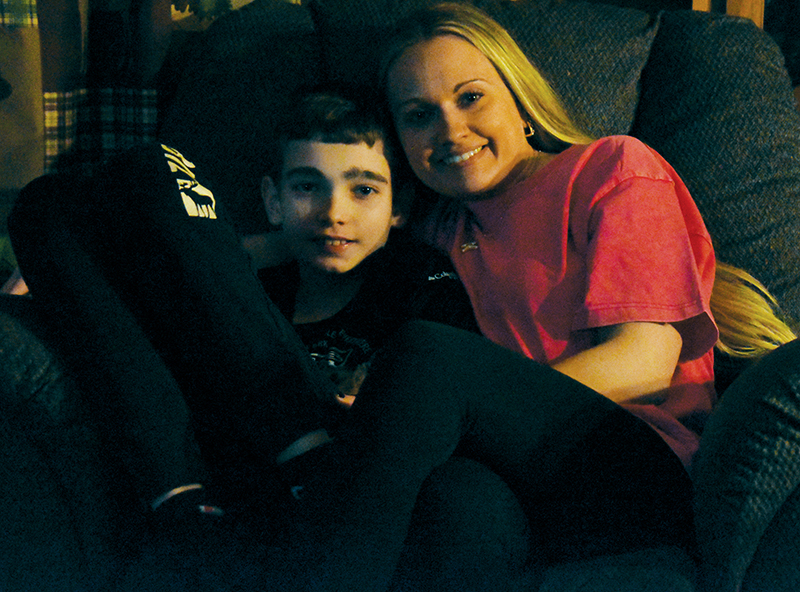
Santeetlah – Catrina Buchanan has two years to make a difference: not just for Graham County, but for others similarly affected in Western North Carolina.
After spending the last four years working at Appalachian Mountain Community Health Center (formerly Tallulah Health Clinic) as a pediatric medical assistant, Buchanan has logged plenty of hours with patients ranging from 0-18. Through her day job, she has undoubtedly gathered a wealth of knowledge and expertise.
Yet, nothing that Buchanan sees at work compares to what she and her husband Chevron have lived at home.
On Feb. 11, Gov. Josh Stein announced the appointments of numerous individuals from across the state to serve on a bevy of councils. Catrina was 1-of-4 named to the N.C. Interagency Coordinating Council for Children from Birth to Five with Disabilities, as a mother to 12-year-old Abel Buchanan.
"I'm so excited," Catrina said. "I hope I can make a difference. If anything, I can be a voice for him.”
The 26-member council includes parents, providers, and members of health departments and social services. Once a two-year term expires, an individual cannot be re-appointed.
The council advocates for infants, toddlers and preschoolers who have a medical disability for an IEP (Individualized Education Program), which is mandated by the IDEA (Individuals with Disabilities Education Act).
Catrina admits that she discarded the initial email she received about joining the council in November. Proving that a greater plan was in place, a former member of the council – Robbinsville Elementary School Art Teacher Lynn Lynn – soon forwarded the same email to Catrina and reached out to offer words of encouragement about signing up for consideration.
"I got a phone call from Raleigh – and ignored it," Catrina chuckled. "I thought it was a spam call, but I checked my voicemail and it was the Governor's office. By then, I had an email congratulating me as well."
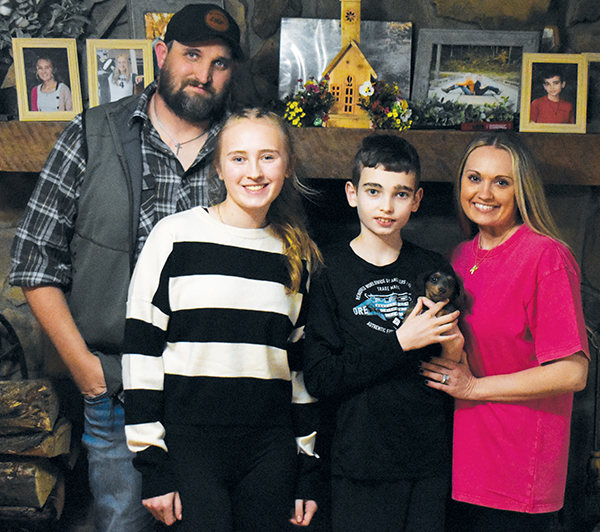
Abel's story
Born Jan. 7, 2014, Catrina instinctively knew something was wrong with her son. Abel was four months old when he experienced his first grand mal (tonic-clonic) seizure, which the Mayo Clinic defines as a epileptic condition that causes a sudden loss of consciousness, body stiffening and violent, rhythmic body jerks.
An MRI when Abel was six months old confirmed focal cortical dysplasia (epilepsy), which the Cincinnati Children's Hospital says is when the top layer of the brain doesn't form properly.
"He seized all the time when he was little," Catrina explained. "We spent more time at the hospital than we did at home. You could wake him up from a nap and he'd go right into a seizure."
"With his medication, he would grow so fast that he would outgrow his dosage," Chevron added.
In 2024, Abel was diagnosed with dyslexia and dysgraphia (a writing disability, according to the Cleveland Clinic). A new symptom appeared in October: Todd's Paralysis, a brief, temporary weakness in either a portion or all of the body following a seizure that can last between 30 minutes and 36 hours, according to the National Center for Biotechnology Information.
His condition is not easily controlled by medication, with Catrina estimating that Abel takes almost 300 pills on a monthly basis just to manage the epilepsy, which is monitored by quarterly blood tests.
"It's been like that for years now," Catrina said. "That's actually a smaller amount than he used to take.
"If he wasn't on medication, he would seize to death."
A recent analysis revealed that Abel's brain displayed seizure activity every two minutes. Surgery is an option, but not one Catrina and Chevron will pursue – due to the risk involved.
"It's only 80% effective," Catrina said. "His dysplasia is in the center of his brain, right next to his memory and speech. That's just not good enough for me."
"The Lord can do anything, but unless the Lord does it, he'll always have a seizure disorder," Chevron said. "He's too healthy to risk a surgery."
"I told them in my (application) letter that we need more resources here and we need to work on getting these kids screened at an early age, when parents think that there's some sort of developmental delay,” Catrina said. “Kids just do not get the access and help that they need."