
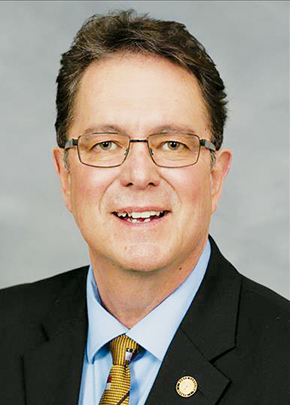
Kevin Corbin
Raleigh – Another rural broadband bill sponsored by state Sen. Kevin Corbin, R-Franklin, is making its way through the General Assembly.
Senate Bill 689 – the County Broadband Authority Act – seeks to facilitate the creation of broadband access underserved areas in North Carolina, by expediting access to municipal and cooperative utility poles and lines. It would also authorize counties to provide grants to high-speed internet providers, build broadband facilities and equipment, and to levy taxes to support such projects.
It would also amend current North Carolina law, allowing counties to use property taxes to provide the grants and construction.
“It doesn’t matter if I am in Manteo or Macon County; the main question I get asked is how can I help get Internet to residents in western North Carolina,” Corbin said in a Monday press release. “I have worked with my colleagues across the state to secure millions of dollars in funding to expand broadband, but I recognize there needed to be more done to give local governments the ability to best serve their residents.
“What works in Swain County may not work in Clay County and no one knows that better than county leadership.”
The bill defines an underserved area as an area identified by the Federal Communications Commission where a download speed of at least 25 megabits per second – and an upload speed of at least three megabits per second – is unavailable.
Corbin also said the new legislation would work well paired with the state’s Growing Rural Economies with Access to Technology grant program, a state program funding the development of rural broadband.
“To me this is the third leg of the stool that can support Internet in our region,” Corbin said. “First we were able to get state money through the great grants. Second we are fortunate to have gotten federal grants of over $45 million for the seven western counties. Now we need to allow the counties themselves to help with this critical need if they choose to do so.
“Of course, its not mandatory. Each county can decide how much to participate or if to participate at all.”
The bill passed its first reading on April 8 and was referred to Senate operations the same day.