
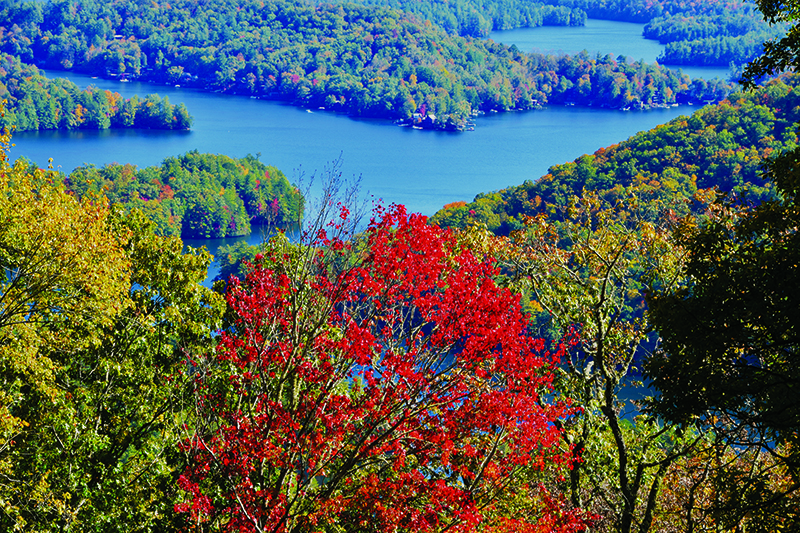
As any resident of western North Carolina is aware, fall color has come late to the mountains this year.
The combination of record-setting high temperatures in September – along with the drought that followed – both slowed and muted the changing of the leaves. According to the Farmers Almanac, area trees are running at least two weeks behind schedule. Fall color had been expected to finally peak this week or next, but after last week’s torrential rainstorms knocked much of the fall color from the trees to the ground, the peak of leaf season might have already passed.
Deciduous trees are responsible for
fall color, as their leaf pigments change before foliage drops. Chlorophyll provides a leaf’s green color and helps the tree photosynthesize, using sunlight to change carbon dioxide and water
into carbohydrates. Essentially, green leaves are seasonal food factories for trees.
When the amount of light and heat changes in the fall, a tree creates a layer of cells designed to protect the tree from the elements once its leaves are shed. These cells also inhibit the flow of nutrients to the leaf and without constant renewal, chlorophyll breaks down and a leaf’s underlying yellow, orange, and red pigments become visible.
Carotenoids, the same chemicals that make carrots orange, are always present in leaves that turn yellow and orange, but the pigments are masked by the leaf’s green color until fall. The chemical responsible for red and purple leaves – anthocyanin – develops only after chlorophyll breaks down into glucose.
Dr. Beverly Collins, biology professor at Western Carolina University and the university’s official “autumn leaf color prognosticator,” held out hope as late as August for a strong color season.
In spite of an unusually wet and warm spring and summer, Collins reminded everyone, “Overall, the high species diversity and the varied topography of Western North Carolina usually combine to produce a pleasing variety of leaf color for anyone lucky enough to be traveling through the mountains from October into early November.”
But then came September and with it, the drought.
“Drought is the enemy of a good fall,” said Dr. Howard Neufeld, professor of plant eco-physiology at Appalachian State. “The trees have to be in a healthy state – not water-stressed – heading into the season.”
Early this fall, Neufeld witnessed some drought-striken trees simply dropping their leaves rather than changing color. By October, however, he still had hopes for a vibrant season.
“But I’m just guessing, because we don’t have anything to go on. This is unprecedented weather.”