
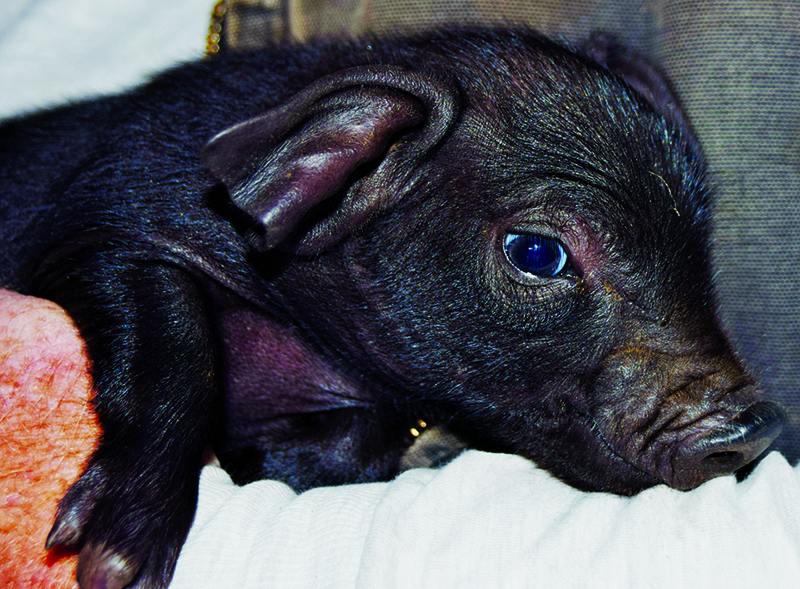
Tuskegee – What do the Large Black pig, the Leghorn Chicken and the Cleveland Bay horse have in common?
All three are examples of heritage breeds, animals that thrived on small farms until industrialized agriculture pushed them to near-extinction.
When Double 00 Farm’s Large Black pig, Piper, gave birth on Monday, Nov. 4, the five-year old sow made yet another contribution to saving her breed, which almost disappeared in the 1960s. One of only 50 actively breeding Large Black pigs in the country, Piper has already farrowed eight litters.
The foraging, outdoor breed was not suited to the intense, indoor, commercialized production techniques that took over most hog operations after World War II.
The Rare Breed Survival Trust added the Large Black to its list of critically endangered livestock in 1973, but in 2015 changed the breed’s status to threatened, as increased interest in pasture-raised meat has driven demand for heritage breeds adept at thriving outdoors.
So, why do Large Black pigs matter?
Originally known as the Lop-Eared Black, the breed’s skill at foraging, living outdoors and producing large litters make it of genetic value, since more modern breeds have lived indoors for generations and become what some farmers refer to as “soft.”
The Large Black still carries the traits of its ancestors who roamed the pastures and woods of England hundreds of years ago.
Hardy and resistant to cold, heat, and sunburn, these large hogs are suited to small operations and even serious hobbyists.
Annette Ensley of Double 00 Farm said that her Large Black pigs are “docile, easy to manage and they make great mothers.” Large Black sows tend to farrow and feed large litters with ease, with most piglets surviving to adulthood.
The breed is also known for producing exceptional meat.
“The meat is micro-marbled and short-fibered which makes it very tender and moist,” said Ensley.
The breed produces superb pork, but cured bacon from the Large Black might be the best use of the breed’s meat.
Known for both its fecundity and meat-quality, the Large Black is also striking in appearance. The pigs are indeed large, with boars reaching 700-800 pounds and sows averaging 600-700.
In the 1800s, the Large Black Pig Society described the hogs as “distinguished by their gigantic size. They are the largest I have ever seen, and as perfect a make as possible in pigs. Their heads are large, with very long ears hanging down on each side of the face so they can scarcely see their way.”
Though somewhat comical in appearance, those huge, floppy ears serve a purpose, protecting the pigs’ eyes as they root and forage for food.
“Some people think they’re funny-looking, but I don’t,” said Ensley, whose Double 00 Farm is one of only 20 farms in the country to register Large Black litters so far this year. “They are hardy pigs, easy to raise and easy to get along with.
“This is a breed worth saving.”