
Robbinsville High School student completes basic training
Most wait until they are either near or have just graduated from high school to begin basic training.
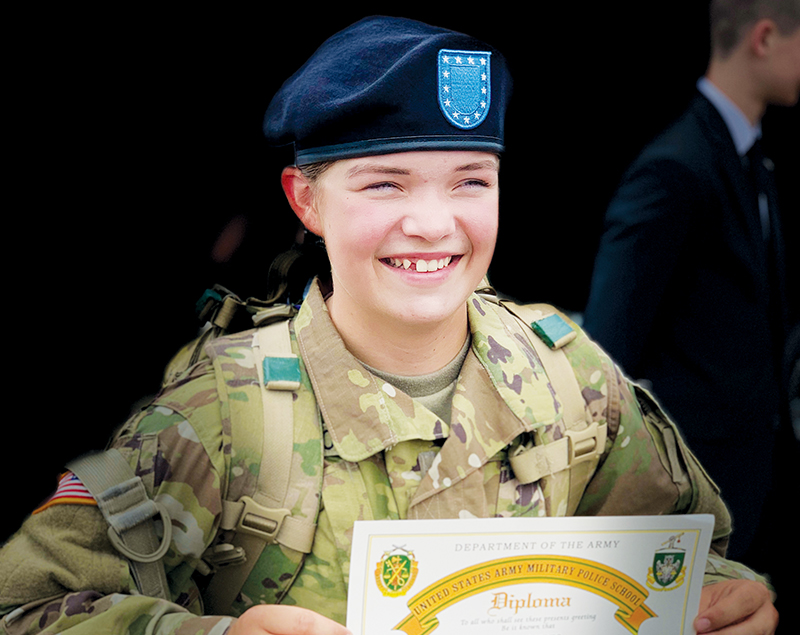
Ainslee Munro decided to get a jumpstart.
Now a senior, Munro embarked on two months of National Guard training over the summer. Having a U.S. Marine for a father certainly played a role, but a recruiter in her hometown of Youngsville helped plant a seed as well.
“He was a family friend,” Munro said of the recruiter, Justin Berrain. “He had been trying to get me in the door. I had not been thinking of going the (National) Guard route until he explained the difference in education benefits.
“I’d always kind of been around that environment, so it’s something I’m comfortable with.”
Fire sparked
Though the recruitment weighed heavy in her mind, Munro’s plans were solidified last year while on a boat with her mother.
“We were in a Trump (boat) parade, of all things, and there were protesters yelling at us,” Munro recalled. “I told my mom that I was tired of this. I’m tired of the stuff that’s happening overseas. I’m tired of not being able to do anything about it. She told me I had to do what was best for me.
“As time went on, I was sad and disappointed about all the people being lost overseas. I was mad. Anger has always been something that has motivated me to do better.”
Munro’s training lasted from June 7 until Aug. 20 in Fort Leonard Wood, Mo.
“COVID has had a really big impact on how they process a lot of stuff,” Munro said. “I was in a reception battalion for about a week and a half, which is a lot longer than you’re normally there for. Other places normally get you processed in three days; I was there for 11.
Rude awakening
Munro found herself among peers, as several in her platoon were around her age. Only 17 when she reported, Munro was met with a harsh reality upon arrival.
“Being that young, there’s definitely a stigma,” Munro said. “Drill sergeants aren’t as forgiving because you’re young and supposed to be more athletic, I guess. But we quickly found out we were the most un-athletic class they have had in the past few years.”
A typical day for Munro consisted of waking up at 3 a.m., with first formation occurring at either 4:30 or 4:45 a.m.
“We said good morning to the sun; not the other way around,” Munro said.
After greeting the sunrise, the tasks ahead varied, depending on which phase of training was underway.
“Red Phase (Phase 1) was definitely the most eye-opening; it was the ‘rough’ phase,” Munro said. “You’re brand new and they’re turning you from a civilian to a soldier. We would do physical training for about an hour every morning. Stretching everything out, either a 5-mile run or a 1-mile sprint and then come back and do strength training.”
The brutal rays of sunshine in Missouri made the experience even more miserable. Heat indexes ranged from 100-108 by noon, with humidity Munro described as “thick.”
“Depending on how hot it was, you’d have to go back in and do a ‘heat dump,’ which is a full submersion in cold water for two minutes,” she said. “You had to get your core temperature down. We’d do outside maintenance a lot – making sure the company looked nice – and you’d just be dripping in sweat, no matter what you did.
“Probably the scariest moment was when we had a ‘heat causality’ in my platoon, which had about 45. He passed out and seized on the side of the road while we were completing one of the last runs that we had to do. I don’t know how hot it was that day, but we were literally in the last ¼ mile of the run and he just dropped like a fly.
“My senior drill sergeant ended up having to call for a medic to come pick him up in a Humvee and take him to the hospital. We didn’t think he was going to graduate – because our last requirement was that night, our patching-over ceremony – but thankfully, he was patched over the day of graduation.”
Road ahead
Munro completed Stow 1 Training, meaning though she has completed basic, she will continue to report to the nearest duty station, which is in Asheville. Today, she reports once a week for drills and will go back next year to Missouri to complete job training, which will make Munro a fully qualified military police officer. She will then return to drills in Sylva and in her contract, full coverage of a college education – Munro is considering a degree in psychology – is included.
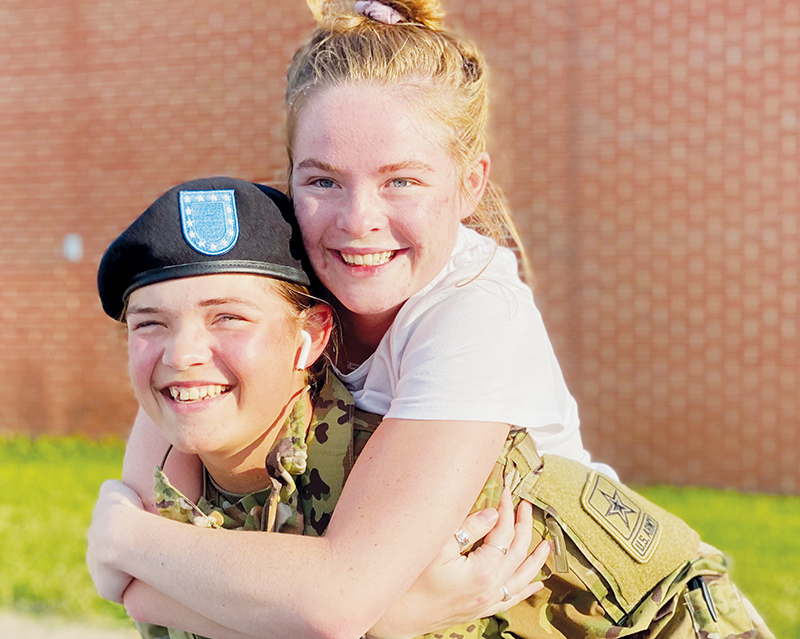
But for now, Munro is thankful and excited about the experience so far. Being reunited with her family after the two-month absence, however, was welcome.
“Our drill sergeants told us that it would be different when we went back home,” Munro said. “When we had family day, you got to spend about eight hours with your family. My sister was the first one to see me, and I had not got to see her before I left, so I remember when we were dismissed to go see our families, she was the first one I went to. I cried.
“I’m with somebody from my family all the time, so going from that to not being able to see them, touch them … FaceTime is different. You definitely don’t get any of that in training. I was gone too long from home. I missed them.”