

Marshall McClung
Autumn is a beautiful time to be in the woods, with all the leaves turning different colors.
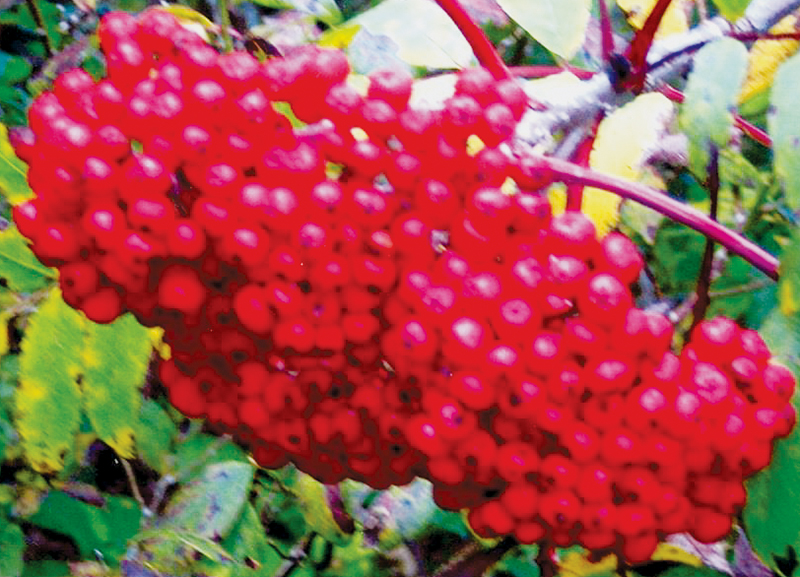
Adding to this beautiful array of colors are the bright red berries of the mountain ash trees.
Mountain ash is native to eastern North America, reaching a height of 40 feet or more with the larger trees found in the Great Lakes region of northeastern America.
In Graham County, it is more likely to be found in our higher elevations above 5,000 feet. The tree is actually a member of the rose family.
There is a lot of history involving the mountain ash tree. Early Europeans thought the tree helped ward off evil and it was referred to as “the wayfarer’s tree.” Eighteenth-century Americans believed it could be used to exorcise witches and called it “witch wood.”
The American ash also had more practical uses among early settlers and Native Americans, who used the berries and the bark to produce dye for coloring clothing. Some Native American tribes also used the bark and berries to make a tea for treating colds, digestive disorders, allergies and to induce vomiting.
On a more pleasant note, pies and jellies were made from the berries.
The best place I know of to see the mountain ash is on the Cherohala Skyway, on the upper side of the road between the Santeetlah overlook and Big Junction overlook. For a closer look, take the Hooper Bald Trail from the trailhead – also on the skyway – to Hooper Bald.
As you come onto Hooper Bald at the top of the steps, look to your left along the tree line, or walk down to them for a close-up look.
Marshall McClung is the historical columnist for The Graham Star. He can be reached via email, mcclungs@email.com.