
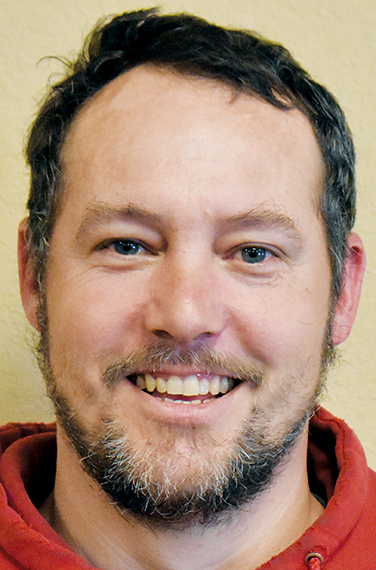
Scott Kamps
* Conclusion of a 2-part column
My last column ("The Frenches and Snowflake Adoption," July 17) briefly introduced Stuart and Maggie French, as well as their children. The column focused on the couple's 2024 snowflake adoption.
I wrote about their experience for two reasons: they’re extraordinary people who should be commended and their story highlights the lack of moral consistency in the “Wild West” of in-vitro fertilization.
Socrates said, “It’s not living that matters, but living rightly.” We need to know what’s right/good and what’s wrong/evil; moral confusion and chaos lead to suffering and misery.
Two primary reasons for moral confusion in the fertility clinic world are the lack of humility to look to God’s word for what’s right/wrong and the trickiness of issues surrounding in-vitro fertilization.
There are positive things about in-vitro. Many couples unable to conceive naturally have been able to have children through in-vitro technologies. As a pro-natalist myself, I want married couples to have babies very much.
But we still have to consider the questionable realities surrounding in-vitro. In the French’s story, some of those realities really jumped out – even causing Stuart to ask, “Can you freeze your soul?”
One reality is the treatment of human beings as commodities. The language used in fertility clinics accentuates this issue in startling ways: embryos that are not “used” are stored in sibling cohorts in freezers and if the biological parents decide they don’t “need” them, they can sign the “property rights” of their cohort over to the fertility clinic.
Furthermore, clinics have a “grading sheet” for embryos available for adoption. As someone who believes every human being is created in the image of God and inherently valuable, that language is as dehumanizing as much as speech about slaves in the 1800s.
The commoditization of human embryos brings to forefront the heroics of couples pursuing snowflake adoptions. Think about the heroes who sought to free slaves in the 1800s; and consider that right now (by some count) there are around 1.5 million little babies in sterile freezers waiting to be set free. Fertility clinic's self-proclamations of being ethical hint that the moral ground there is tricky. In the name of ethics, clinics will not let prospective parents of genetically-tested embryos know the gender of the embryos. That’s good as far as it goes, but that attests to the fact that life begins at fertilization, not implantation (since the embryos will implant later). This is very significant for the debate of when life begins in regard to birth control pills.
Still, a clinic then has no qualms with “throwing out” the genetically-tested embryos that “don’t pass the test” (i.e., have Down’s syndrome). Even the process of creating more embryos than will be implanted is problematic; it’s obviously wrong to keep your children in a freezer – even if you plan to thaw them out in a few years.
These issues are not going to go away anytime soon; we need to think through them before they become personal.
Scott Kamps writes a bi-weekly column for The Graham Star. He can be reached via email, thestableguy@frontier.com.