

Marshall McClung
There was a time many years ago that if you visited our high mountain balds, you would have heard cowbells ringing out in the distance.
Enos C. Hooper is the man credited with first bringing cattle into our mountain region, especially Hooper Bald – which was named for him – as well as Oak Knob, Big and Little Huckleberry, Whig Meadows, King Meadows, Patrick and Sim Meadows. The latter were named for relatives of his.
All these areas were covered in lush grass.
Graham County’s first doctor, Hooper arrived around 1840 and had land grants from the federal government covering thousands of acres that included some of the best grazing land for cattle in the county.
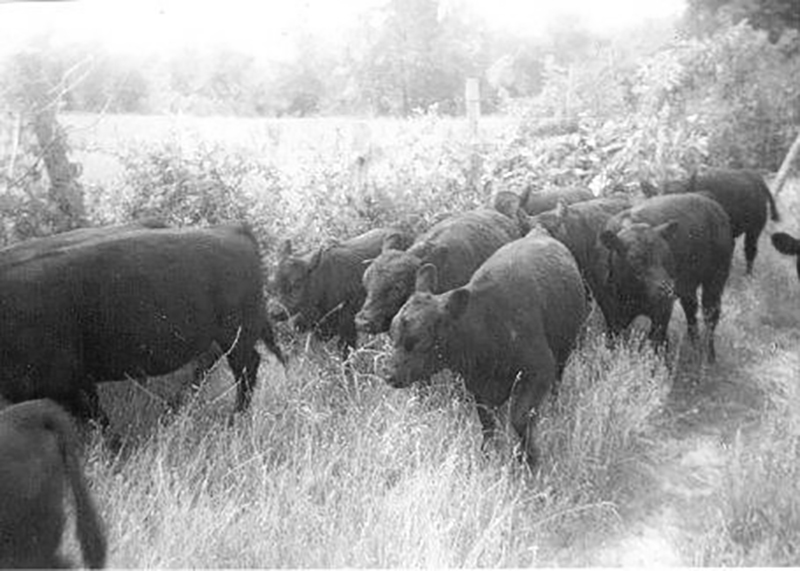
In 1909, his grandson Sim Hooper brought the first Angus cattle to Graham County to the meadows. In addition, Sim served as a schoolmaster for the Cherokee's and spoke of watching them play stickball on Hooper Bald.
The Hoopers also introduced a new breed of ponies known as the “Hooper Pony,” which were ideal for working cattle in the mountainous terrain.
My great-grandfather Gen. Hooper grazed cattle for people in the area for $1 per head. He built several roads with hand tools. He constructed a wagon about half the size of those used by the early settlers. These larger wagons had difficulty traversing the steep, narrow roads – which were little more than trails. The smaller wagons were much easier to get through without getting stuck.
It was said that each cattle owner had a bell that was a different tone, thus enabling him to locate his herd when he came to check on them – or put out salt for them.
Cattle were not the only livestock to be brought to this area. Ed Ingram story told me the story of a mule named "Jack," owned by Agnew McClung.
One summer, Agnew decided he would take Jack to the high mountain meadows for summer grazing. This was quite a trip in those days and required some time to get there. Jack was turned out to graze with some other livestock and the family spent a day or so camping and fishing before returning.
When they arrived home, Jack was grazing peacefully in the pasture. He had opened the gate and let himself in. A neighbor told Agnew that Jack had passed his home at 3 a.m., braying every breath and waking up the entire neighborhood.
Today, much of what was once the Hooper landholdings is now National Forest Land administered by the U.S. Forest Service. Some exceptions are a large area owned by the McGuire family and some other smaller private landholdings.
Marshall McClung is the historical columnist for The Graham Star. He is retired from the U.S. Forest Service and can be reached via email, mcclungs828@gmail.com.