
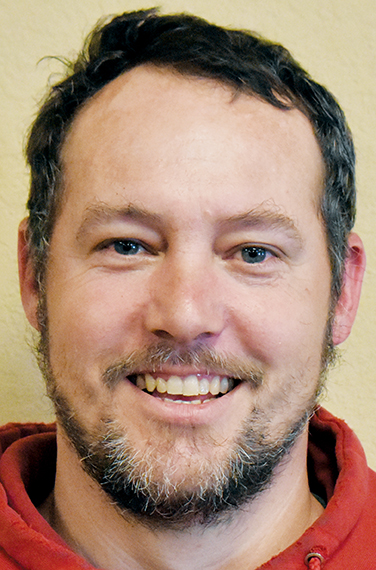
Scott Kamps
It’s been said that you’ll be the same person in five years you are today, except for the people you meet and books you read. Consequently, we ought not to only read books we agree with.
I was recently challenged by ideas in Tom Nichols’ The Death of Expertise. The book is unpopular among uneducated conservatives like me, but it brings up issues we desperately need to grapple with.
The basic thesis is there’s a difference between knowledge and information/facts. Real knowledge isn’t acquired by reading articles on the internet; it’s acquired by serious time, effort and experience over years, or even decades. Since we don’t have enough time to be experts on everything, we must learn to trust experts for many life decisions.
I’d recommend the book even though it’s often patronizing and has one serious short-coming (next column). Still, some positives outweigh the condescension: Nichols argues that cynical distrust of experts is bad for democracy; we need healthy skepticism without actively resenting experts. And, his chapter on higher academia is the gem of the book.
The crucial issue we’d do well to wrestle with is the need to recognize the limits of our own knowledge – even with the internet.
In Thoughts for Young Men, J.C. Ryle (1816-1900) wrote, “Do not be proud of yourself and your endowments of any kind. It all comes from not knowing yourself and the world. The older you grow, and the more you see, the less reason you will find for being proud. Ignorance and inexperience are the pedestal of pride…”
The internet has created a world of ignorant, inexperienced people of all ages who are oblivious to their ignorance!
Ryle continues, “How common it is to see young men with big heads, high-minded, and impatient of any counsel. … They think that they know everything. They are full of conceit of their own wisdom. They think elderly people, and especially their relatives, are stupid, dull, and slow. They want no teaching or instruction themselves: they understand all things.”
That’s a great warning for young men prone to such pride (I know because I was one), but we need to make broader application today. Replace “elderly people” with “people with different politics” and it’s a sharp rebuke to our society.
Those we disagree with are most likely not wrong about everything. We can often learn from them precisely because they don’t have the same blind spots as us. We can further needed conversations if we listen to what others say. Otherwise, we’ll just talk past each other. This, of course, applies to experts as well as “plebeians.”
Socrates engaged with a wise politician and finally reasoned to himself, “I am wiser than this man, for neither of us appears to know anything great and good; but he fancies he knows something, although he knows nothing; whereas I, as I do not know anything, so I do not fancy I do.”
A good dose of Socratic humility would bode well for us in the internet age.
Scott Kamps writes a bi-weekly column for The Graham Star. He can be reached via email, thestableguy@frontier.com.