
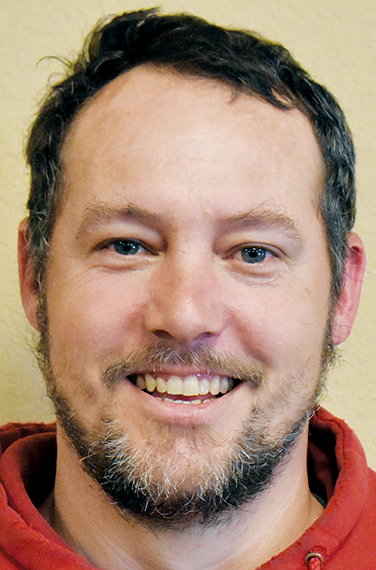
Scott Kamps
The last two columns I’ve written have been about what seems to be a sensible, middle-ground solution to the public education crisis in our nation.
This is uncommon terrain for me because in most politics today, there is no middle ground: our last four presidents have all been hated by half the country.
Many say Trump’s demagoguery and quickness to demonize his opponents has created this polarizing divisiveness. While his lack of statesmanship (and frankly, his social media presence) has accentuated the problem, it certainly can’t account for it completely.
Similarly, others blame the opponents of Trump for this divide. Four years of false accusations of Russian collusion, two failed impeachments and the weaponization of the FBI against Trump under Biden’s administration are just the surface of the hostility and polarization that the Left has exhibited.
Those actions have indeed escalated the hostilities, but they also can’t fully account for it.
The divide between Republican and Democrat hasn’t always been so stark. I looked at the Republican and Democratic platforms from 1968 in preparing for this column and the similarities between the two parties blew me away.
A report from the American Political Science Association in 1950 called for the two political parties to offer much more distinct positions. The report argued the benefits of polarization or distinction of the parties!
Here we need to think with clarity. Much of the polarization today – while escalated on both the Right and Left with unkind, demonizing and hyperbolic rhetoric – exists today because of the worldview or moral divide. It’s not just that the issues are divisive; we aren’t even seeing the issues in close to the same way.
Under Gov. Ron DeSantis’ administration, for example, the Florida Board of Medicine and the Florida Board of Osteopathic Medicine approved a new rule last November banning puberty blockers, cross-sex hormones, and transgender surgeries for minors. They were applauded by some for “protecting children from ghoulish gender experiments that leave kids scarred and infertile.”
In contrast, Biden recently referenced these same actions with these words: “What’s going on in Florida is, as my mother would say, close to sinful. It is just terrible what they are doing.”
I don’t know how something can be “close to sinful” – it either is sin or it isn’t – but the point is that it’s impossible to find middle ground between believing drugging minors is child abuse and needs to be stopped, and the perspective that stopping such practices is “close to sinful” and “just terrible.”
Truthfully, the middle ground isn’t always the most important virtue to pursue. Often, our quest to find middle ground is rooted in an inordinate desire to avoid conflict and the denial of the reality of this moral/worldview divide.
There are two issues at work here and in the many other polarizing issues of the day: our inability to be united and the actual controversies dividing us.
The deeper question we need to consider is, which of these two issues is more significant?
Scott Kamps writes a bi-weekly column for The Graham Star. He can be reached via email, thestableguy@frontier.com.