
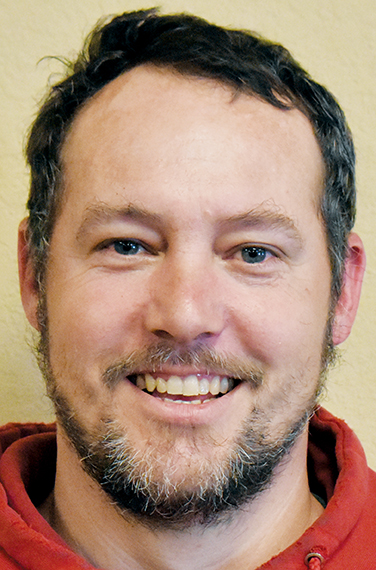
Scott Kamps
* 1st in a 2-part series
C.S. Lewis rightly wrote, “There are no ordinary people.” All human beings have inherent value, but some people stand out.
I met Stuart French – a studious, long-haired seventh-grader who whooped me anytime we played Madden football – about 20 years ago. After high school, he briefly lived in my basement.
He met his wife, Maggie, in the fall of 2011 and married her in September 2012, beginning their remarkable family together.
In 2015, three siblings (ages 5, 6 and 8) moved in with them from foster care; their adoption was finalized in August 2017. Meanwhile, in June 2017, another set of brothers (ages 15 months and 3) moved in; their adoption was finalized in 2019.
In 2020, the youngest boys’ older brother (age 10) moved in; that adoption was official in 2021. The “Frenchie Forever Family” had grown to eight in 8½ years – and in an extraordinary way.
Stuart and Maggie wanted to continue growing their family and looked into embryo adoption (aka snowflake adoption). This is the process of adopting frozen embryos created by others through in-vitro fertilization and not used by the biological parents.
During IVF, embryos are created by doctors, who fertilize the mother’s eggs with the father’s seed in a Petri dish and then freeze the embryos. Because this process is expensive, many fertility clinics create more embryos than necessary for inserting and save the “unneeded” ones for later. These frozen embryos are stored in sibling groups called "cohorts."
If biological parents decide not to use their frozen embryos, they can sign the property rights of their cohort over to the fertility clinic, who can offer them up for snowflake adoptions. The adoptive mom is given hormonal drugs to prepare her body, the embryo is thawed out and inserted in her uterus – with the hope that it will implant in her uterine wall within a few days.
Once the embryo implants, the woman is officially pregnant and the rest of the process is familiar to most of us.
Stuart and Maggie were given profiles of biological parents of existing frozen embryos at a fertility clinic. These profiles provide parental information including: height/age/weight at the time of their donation, along with their education level, religion, ethnicity, hair color and health history.
Adoptive parents can choose between a cohort that’s genetically tested or not. Genetically-tested embryos that don’t pass the test are thrown away, resulting in a greater likelihood of a successful outcome. Many adoptive parents choose large cohorts, but the Frenches pro-life convictions led them to choose a non-genetically tested cohort of just one.
On March 13, 2024 – after having been frozen since July 2015 – their embryo was thawed and inserted. Four days later. Maggie experienced significant sickness; sure enough, the embryo had implanted. She gave birth to a beautiful little girl in November 2024.
I got a chance to hold her again and was reminded that, despite the crazy times we live in, there are still extraordinary people like Stuart and Maggie.
Scott Kamps writes a bi-weekly column for The Graham Star. He can be reached via email, thestableguy@frontier.com.