
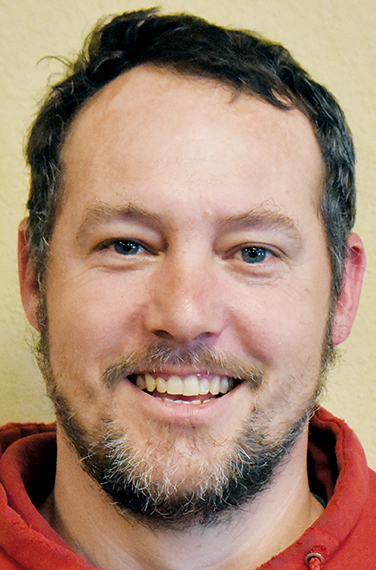
Scott Kamps
The cold hard truth in our sin-cursed world is that all human relationships end in pain; it’s been said the greater the love, the greater the sorrow will be.
Grief is an unwelcome visitor, arriving and reshaping life without our consent, but he’s also our inevitable guest if we live long enough.
I thought I understood a thing or two about grief. I’ve experienced loss in my journey on this planet: three grandparents, two cousins, and a pre-born daughter. But through these sad losses, I never lost my footing: I mourned, healed and moved on.
Grief has taken an entirely new meaning with my daughter’s unexpected death in January. This intense grief is raw, relentless and all-consuming. It’s an experience I don’t wish for anyone, but it’s inescapable – every human relationship ends in bereavement.
I had a friend recently tell me it would not be difficult to rid the world of grief; all you have to do is rid the world of love. As Queen Elizabeth said, “Grief is not a sign of weakness, nor a lack of faith. It is the price of love.”
Grief is the price of love. That raises an interesting thought experiment: would we be better off not loving, so we’ll not experience so much grief?
Most of us are “safety-first creatures.” If we know something might lead to suffering, we tend to avoid that thing – even if that thing is love.
Would you trade the love you experience(d), so present or future grief wouldn’t be felt? Would it be worth it for me to go back to 2022 and decline giving my daughter a foster home, so the pain my family and I are enduring now would be avoided?
While my answer is a resounding "no," C.S. Lewis gave a deeper answer in his book The Four Loves, writing: “There is no safe investment. To love at all is to be vulnerable. Love anything, and your heart will certainly be wrung and possibly be broken. If you want to make sure of keeping it intact, you must give your heart to no one, not even to an animal. Wrap it carefully round with hobbies and little luxuries; avoid all entanglements; lock it up safe in the casket or coffin of your selfishness. But in that casket – safe, dark, motionless – it will change. It will not be broken; it will become unbreakable, impenetrable, irredeemable.”
Whether we invest in people or selfishly avoid love to evade pain has consequences on our souls. There’s no neutral, unchanging position. If we avoid deep relationships to evade future pain/grief, our hearts will harden into self-protective lovelessness – and frankly, they will still break at times; just not well.
There’s no shame in being broken-hearted if our hearts break well, having loved genuinely and deeply. If we grew in our love for others while they were with us, we’ll continue to grow as our love turns into grief.
After all, “Grief is only love that’s got no place to go.”
Scott Kamps writes a bi-weekly column for The Graham Star. He can be reached via email, thestableguy@frontier.com.