
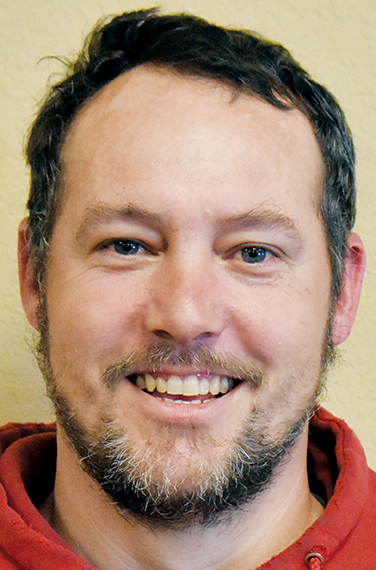
Scott Kamps
My wife and I had our first child in 2004.
Like many before us and since, we anticipated the day for months: taking birthing classes, going to doctor’s visits, and enjoying ultrasounds and baby showers – with growing excitement about the upcoming birth of our son.
At nearly midnight the night before the due date, my wife started having contractions five minutes apart.
We went to the hospital and she was well into her labor; it wasn’t too long and we rejoiced with the birth of a beautiful, over 9-pound boy!
To say we were proud parents would be an understatement.
The next year, my wife was pregnant again and similar doctor’s visits and ultrasounds ensued, this time with an infant in tow. Around 20 weeks, we were sent to an ultrasound specialist in Asheville for one of the ultrasounds.
At the ultrasound, the technician looked around briefly and said words I’ll never forget in my life: “There’s no heartbeat.”
We had a long, tear-filled drive back home that day. A couple of days later, we spent the day in the hospital as my wife was induced to deliver our stillborn child.
We spent the time waiting for the delivery reading and praying together during an incredibly difficult day that ended with me holding our lifeless daughter in the palm of my hand.
We named her, bought a family plot in a cemetery and had a small graveside service.
Many can empathize with these experiences to one degree or another, but too often we ignore the irreconcilable contradiction of heartbreaking miscarriages and abortion. How can a young couple endure such heartache and pain when undergoing the loss of a child in the womb; yet if the mother and/or father don’t want the child, it supposedly becomes a morally required “right” to intentionally be rid of him/her? Is this why post-abortive depression is so common?
While abortion hides behind euphemisms like “terminating a pregnancy,” we all know the truth of what it really is. Even The Handmaid’s Tale refers to a pregnant woman (Ofwarren) as “a carrier of life.” We refer to baby showers for expecting couples, not “clump of cells” showers: we know what’s in a pregnant woman’s womb. Many have experienced the heartache of miscarriage or stillbirth, knowing a human being has died.
This is not an issue for Democrats to appallingly use to win an election, or for Republicans to avoid to win an election; it’s the real oppression of the most defenseless human beings in our society (two every minute of every day in the United States) and should invoke genuine moral outrage and national mourning/repentance.
It’s the two-year anniversary of the Dobbs decision overturning Roe v. Wade, which made abortion legal in all 50 states—Dobbs erased that “law,” returning the jurisprudence of abortion to the states. But the last two years have shown that the culture of death—although an irreconcilable contradiction—is entrenched in the hearts and minds of too many Americans.
Scott Kamps writes a bi-weekly column for The Graham Star. He can be reached via email, thestableguy@frontier.com.