
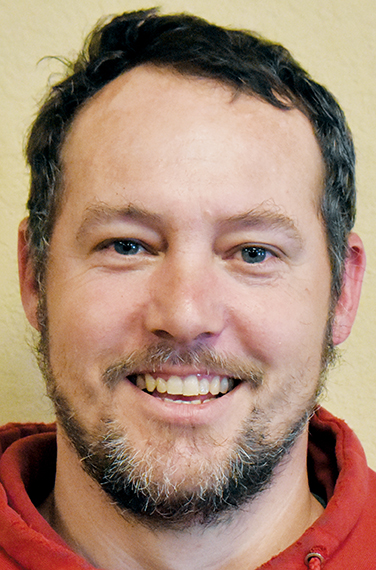
Scott Kamps
“Banned Books Week” is next week.
Today’s outcry over “book banning” doesn’t flow from actual threats to freedom of speech; book bans don’t exist in America anymore.
One example of true book banning occurred in the 1500s. William Tyndale fled his homeland to translate the Bible, because English translations of the Bible were illegal in England (banned by the Catholic Church). After finishing part of it in 1526, Christians smuggled the Bibles into England, where Bishop Tunstall had banned them and was burning them.
Today’s controversies have nothing to do with outlawing the publishing or distribution of books, but are over what books should be accessible to children in libraries and who should make those decisions: professionals or parents. Professionals – who know better – attempt to incite “outrage” over supposed attacks on intellectual freedom. The American Library Association says, “The number of attempts to ban or restrict books across the U.S. last year was the highest in the 20 years the American Library Association has been tracking such efforts.”
Looking at the top 13 banned books – according to the association – you will see titles such as “Gender Queer” and “Flamer.” In fact, every single one of the books was “banned” because of sexually explicit and/or LGBTQIA+ content.
Professionals detest that parents know better than experts which books are appropriate for children. Rather than make a coherent argument for sexualizing children, they resort to riling up public uproar, crying, “Book bans!”
The reality is “book banning” today is Leftist doublespeak to cover for the ideological indoctrination of children happening all over America. A friend of mine had his 7-year-old daughter in elementary school outside of Charlotte – a small town, full of churches where everyone knows each other. After COVID, his wife visited the school’s Scholastic Book Fair.
Prominently displayed for the young children was the book, “My Mommies and Me.” Following a respectful appeal to the librarian and school administrators, my friends were told the school needed to be “inclusive.”
Now it’s one thing
to let parents raise their kids with their preferred values; it’s another to promote such ideology to elementary school children. More questionable material came to their daughter through the school, again through Scholastic. Still, school officials could not/would not provide adequate explanations or change. My friend insists these problems didn’t come from teachers – many teachers are actually afraid of losing their
jobs in the current public school environment; organizations pushing “inclusivity” permeate nearly every American public school.
Are Scholastic and the American Library Association really seeking to bring moral change through school libraries and books? Or am I some kind of conspiracy theorist?
The association’s president Emily Drabinski said, “…libraries need to be locations for socialist change.” Comrade Emily has also written – in her most cited work on Google Scholar, “Queering the Catalog,” that “queerness includes the subversion of… normal family types.”
That explains drag-queen story hour.
If you think libraries exist merely for the purpose of helping people find a good book, think again.
Scott Kamps writes a bi-weekly column for The Graham Star. He can be reached via email, thestableguy@frontier.com.