
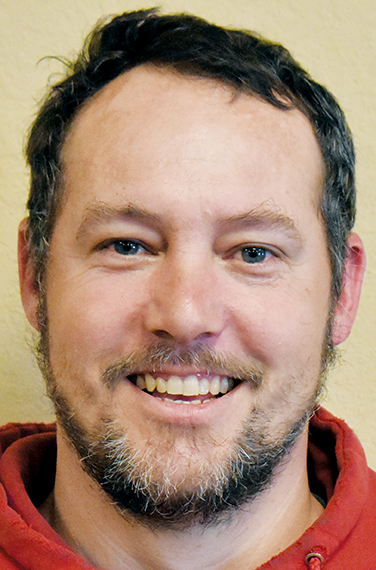
Scott Kamps
This column has nothing to do with whether or not the column’s title is true.
The point of this piece is that I can say it – without fear of going to prison.
It would be unethical to write something with no truth in it. In fact, libel is defined as a statement with “actual malice;” actual malice doesn’t refer to the desire to hurt someone, but is a legal term meaning the statement was published with knowledge that it’s false or with reckless disregard of whether it’s false or not.
But statements can be published on suspicion.
Most reasonable people acknowledge the Biden campaign was involved in some voter fraud; the controversy surrounds whether it was enough fraud to swing the election.
More significantly, there was clearly election interference. Biden’s presidential campaign prompted former acting CIA Director Mike Morell to “help Biden” by organizing fifty colleagues to sign a letter falsely claiming the damning emails from Hunter’s laptop was Russian disinformation. This letter was then used to censor the laptop story on Facebook and Twitter.
Whether this interference was enough to swing the election remains a heated controversy.
In the 1790s, America – still a young nation – was hotly divided into two factions: Federalists and Democratic-Republicans. They were dealing with accusations of foreign interference in elections (by France), and they were concerned with an immigration problem: primarily French and Irish immigrants.
The response of the Federalists in power was the Alien and Sedition acts.
Only one of these four laws was directed against American citizens: the Sedition Act of 1798, which made it illegal to criticize the U.S. government under penalty of fines and/or imprisonment.
The only journalists prosecuted under the Sedition Act were editors of Democratic-Republican newspapers. Some might minimize the censorship of the law by pointing out that fewer than 20 people were convicted under it, but these were editors of influential newspapers that influenced many other newspapers. It would be akin to claiming the FBI’s recent attempts to censor were minimal because there is only evidence of them doing it with two companies – but those companies are Facebook and Twitter.
Why do governments have a tendency toward censorship and political repression? French President Emmanuel Macron defended France’s 2018 censorship law in the name of fighting fake news, saying the law was needed “in order to protect democracy.”
Matthew Lyons (1749-1822) – the first person charged under the Sedition Act – publicly opposed President John Adams and was charged by the Federalists of being “a malicious and seditious person…of a depraved mind and a wicked and diabolical disposition.” He was convicted and sentenced to imprisonment and fines.
Lyons was charged and imprisoned while serving in the House of Representatives. Can you imagine living in a time when those in power sought to imprison their political opponents?! He actually ran his reelection campaign from his jail cell, winning in a landslide.
It’s been said that telling the truth doesn’t cause governments to fall; rather, the abuse of power causes governments to fall.
Scott Kamps writes a bi-weekly column for The Graham Star. He can be reached via email, thestableguy@frontier.com.