
Marshall McClung
Land records – especially older ones – are a good source of local history.
This is especially true if you are looking for information on a certain area.
That was the case when Hoot Gibbs and I decided to look up the history of a tract of land located in the Massey Branch area. Hoot is excellent in researching land records and his findings have appeared in several earlier columns. When searching out land ownership here, one must remember that the Cherokees were on this land long before any white person ever set foot on it.
In 1862, Thomas Carver obtained a land grant from the state of North Carolina for 215 acres on Massey Branch that bordered what was then-Cheoah River, but in time would become Santeetlah Lake.
Prior to the construction of Santeetlah Dam in 1926, Carolina Aluminum Company (later Alcoa Aluminum Company) began obtaining property that adjoined what would become the shore line of the lake. This included the Carver property.
As was often the case, more property was obtained than was needed for the lake. The U.S. Forest Service obtained the excess property in this area including what had been the Carver property.
In 1952, Cole Carver approached the U.S. Forest Service about a possible land exchange. Carver offered to exchange a 44-acre tract of land that he had obtained from Clyde and Alene Davis in 1950 – which lay above the Cheoah Ranger Station on Massey Branch – for an 8.3-acre tract of land that was part of the land Thomas Carver had owned.
Cole stated that he wanted the land because it bordered his old home place. The Forest Service agreed to this exchange, as it would give them ownership of the land that lay above their water source for the ranger station. The exchange was completed on June 2, 1953.
In time, John C. Carver III and Loretta Carver became owner of the Cole Carver property. On Dec. 19, 2005, the land was sold to a resident of Cumming, Ga.
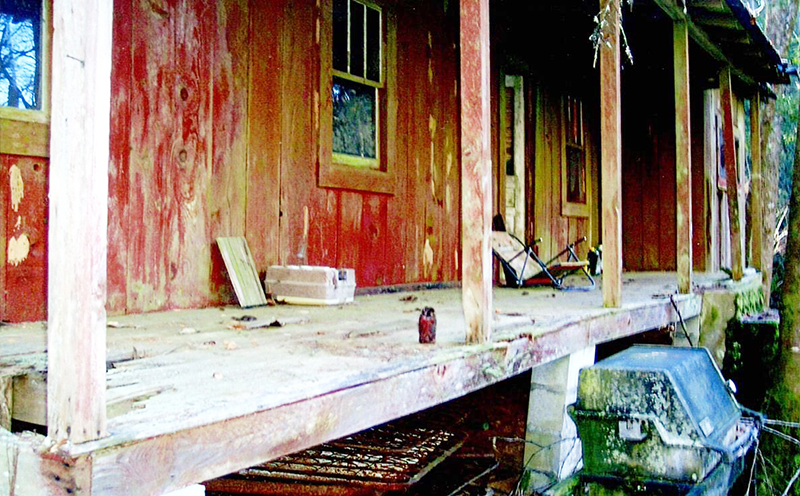
There is an old cabin on the property referred to as the “Cole Carver cabin” by locals. I first saw this cabin in the 1970s and once more in the 1980s, but hadn’t been to it since until Hoot and I visited it recently. We expected to see it lying in ruins, but it was in much better condition than we ever thought it would be.
We did not enter the cabin, as it is private property and we did not have permission to be in it.
Marshall McClung is the historical columnist for The Graham Star. He can be reached via email, mcclungs@email.com.