
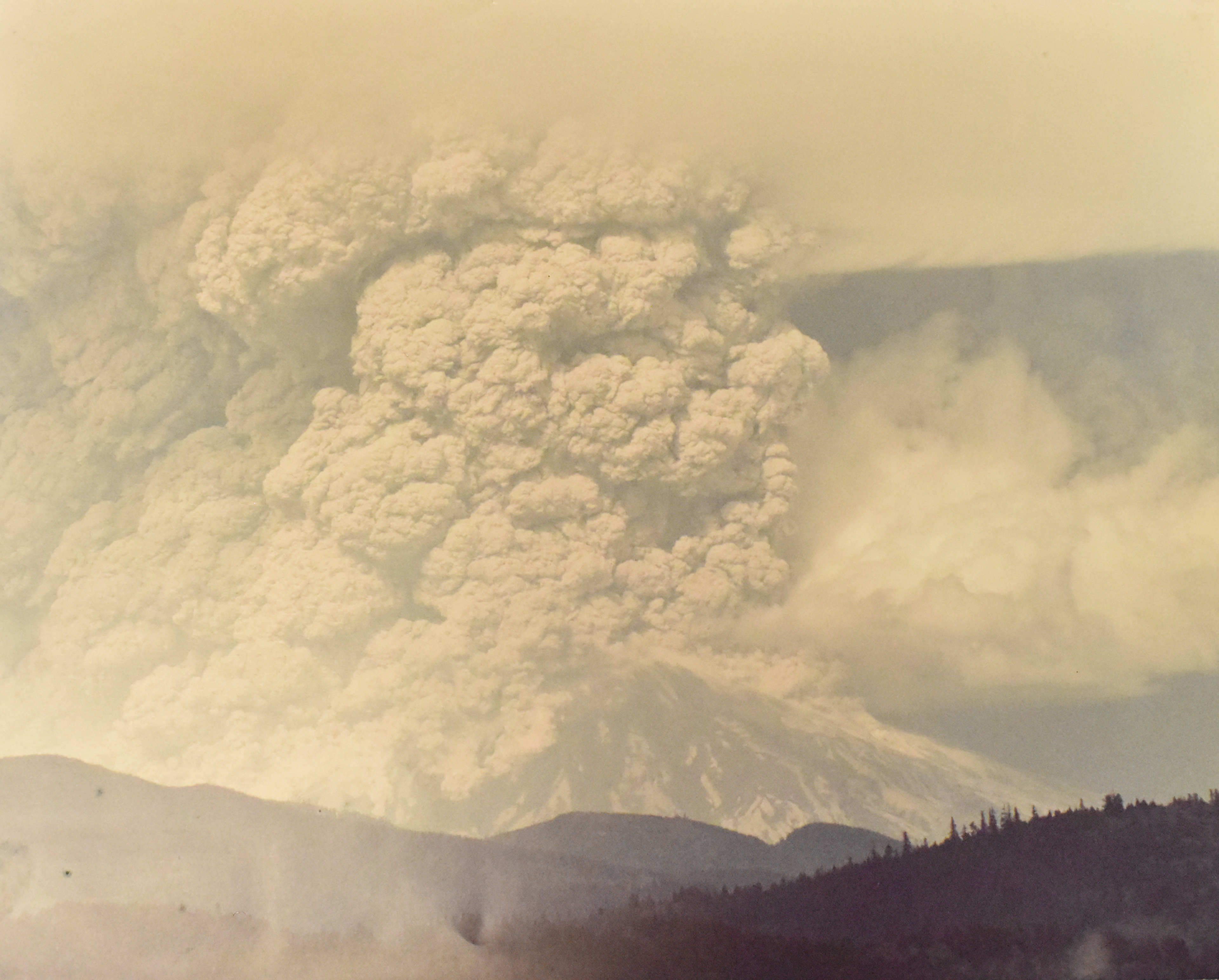
In 1980, I had been employed with the U.S. Forest Service for 13 years and had already been on numerous large wildfires in the western United States. None of that prepared me for what was to come though – an active volcano.
I had not realized that it had been 40 years since the Mount St. Helens volcano eruption until The Graham Star’s publisher/editor, Kevin Hensley, mentioned it recently. Like most of my dispatches out West, this one was a “we need you now” situation, on short notice. I was to spend 19 days on this one.
I had flown by Mount St. Helens several times on trips to other fires. When I first saw the mountain and the area for miles around it, I was astounded. It is difficult to describe the destruction viewed from the air. In the days to come, several aerial reconnaissance flights would be made to observe the activity of the volcano.
Mount St. Helens had been dormant for many years. However, at 8:31 a.m. Sunday, May 18, 1980, it came to life with a fury 500 times more powerful than the atomic bomb dropped on Hiroshima, Japan, during World War II. A good 1,277 feet of the mountain were blown away. A mushroom cloud rose 63,000 feet into the air.
Spirit Lake – located below – disappeared in an avalanche of tons of dirt, ash and rocks. Boulders the size of vehicles were thrown hundreds of feet into the air by the blast. So much debris fell into the Toutle River that every bridge for 30 miles downstream was swept away. Hot ash caused the water temperature to rise to 90 degrees, killing every fish in the stream.
Seventy-five people were killed, many of them miles away from the volcano, fleeing in their vehicles. Hundreds were left homeless. The eruption practically destroyed everything in the 100,000 acres surrounding it. So much ash fell that snowplows and motor graders plowed it off highways, much like they would a deep snow. It became so dark that street lights shone.
In the immediate area surrounding the volcano, there was nothing left but mud and volcanic ash. Farther out was a vast area of fallen trees struck by the blast, saw log-size trees torn out of the ground by their roots. Not one tree was left standing in this area.
In the next area were trees snapped off like twigs, leaving only broken parts still standing. Following this was an area of dead trees still standing, but killed by the super-heated air. There was a logging operation in the valley below. Here, logging machinery such as tractor-trailer logging trucks, dozers and skidders were strewn about like a child’s toys.
Mount St. Helens is in the Cascade Mountains range of southwestern Washington State in Gifford Pinchot National Forest. It was 9,677 feet in elevation before the eruption and stayed snow-covered at its peak year-round.
I was assigned as a dispatcher in the fire management section of the Region Six U.S. Forest Service office in Portland, Ore., some 40 miles from the volcano. The eruption had started more than 200 wildfires, some of which were extinguished by the tons of ash that fell.
The fire that I was assigned to was 35,000 acres in size.
For a fire this size and dealing with other forest fires and a still-active volcano, there are several dispatchers working the incident. Each dispatcher will be assigned a certain resource such as crews, dozers, fire engines, aircraft, etc. I was assigned to aircraft, including air tankers and helicopters.
We had crews on this fire, but never more than 15 minutes away from a helicopter to evacuate them in the event of another eruption. A number of seismographs were in place, to record any tremors from within the volcano. When one occurred, I was alerted and called the crews to leave the area immediately.
It was amazing to see how quickly the land healed, with small seedlings sprouting in abundance, in addition to wildflowers. The ash spewed from the volcano was rich in nutrients need by plants. Wildlife – including elk and deer – soon returned to the area also.
In 1982, the Mount Saint Helens Volcanic Monument was established, covering 110,000 acres.
Marshall McClung is the historical columnist for The Graham Star. He can be reached via email at mcclungs@email.com.