
Our mountains have names that date back to pioneer times.
Some are listed by one name on maps and known by locals as another name.
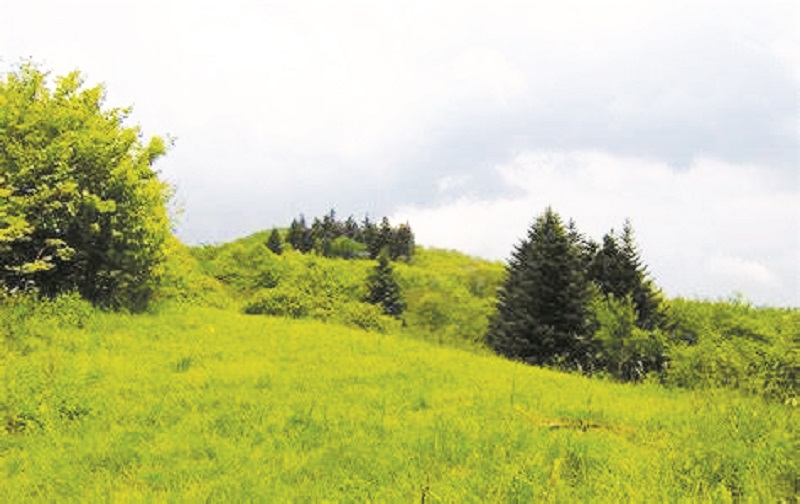
Stratton Meadows – elevation 4,920 – is called John Meadows by locals. The area is named for John Stratton who settled there in the 1830s.
Is it Stratton Bald or Bob Bald? Some say they are one and the same. Others declare they are two separate places.
Be that as it may, the name or names come from Bob Stratton, who lived there at one time on the 5,341-elevation mountain. Bob was one of the many victims of the Kirkland Bushwhackers. He was shot and killed in an ambush on Sept. 2, 1864.
One of the more unusual names is Naked Ground, elevation 4,920 in the Joyce Kilmer Forest. At one time, the area was grassy and bare or naked of trees. Today, it is mostly covered by beech trees.
As to why it was once bare brings up different opinions. Some think it may have been an area where settlers put out salt for their livestock, which ran “free range” at the time. In time, the soil would have become leached by the salt perhaps causing it to become an open area.
Others think a hot wildfire may have caused it. Such a fire burned an area near there in 2016, but has not created an opening like Naked Ground was.
Big Fat Gap was said to have been named for a Cherokee couple named John “Big Fat” Conseen and Sally “Big Fat” Conseen. Some hikers jokingly say it was named for the 1-½ mile steep climb from Slickrock Creek to Big Fat Gap. They say you won’t be as big and fat when you get back out as you were when you went in.
The name Hangover Mountain, elevation 5,160, has nothing to do with the after effects of getting drunk, but rather for the rock cliffs that hang over the area below.
Some areas are referred to as “deadens." When early settlers were clearing land for crops and home sites, they would remove a section of bark all the way around a tree. This was known as “deadening” a tree, as it would cause it to eventually die. They would do a section of trees like this and the area would be referred to as a “deaden.”
Claude Hyde – who had a camp near Hooper Bald – said a Hudson family that lived on Bear Creek deadened a stand of timber and the area became known as Hudson Deaden.
A man known as “Goldie” deadened trees on a section of Horse Cove Ridge, which became known as Goldie Deaden.
Marshall McClung is the historical columnist for The Graham Star. He can be reached via email, mcclungs@email.com.