

Marshall McClung
* Part 1 of a 3-part series
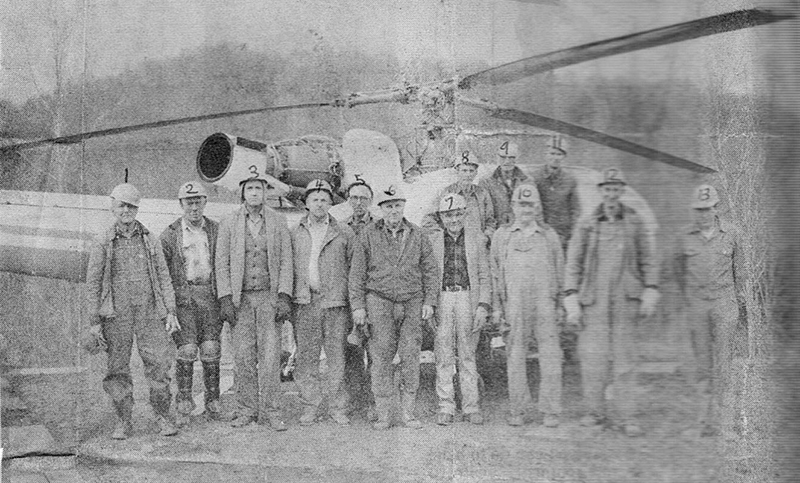
In 1973, a work program that employed senior citizens began with the U.S. Forest Service – both here and nationwide. The program was so successful that it came to be regarded by many in the forest service – and the general public – as the best program of its kind since the Civilian Conservation Corps.
The program still has such an effect on those involved that retired forest service employees Hoot and Virginia Gibbs suggested that I write a story about it.
The program was first known as “Operation Mainstream” and later as “Senior Community Service Employment Program.” It became known simply as “The Older American Program.”
It was developed by the U.S. Department of Labor, which paid workers the minimum wage – which was $1.25 per hour at the time. Crew leaders got $1.35 per hour. The U.S. Forest Service provided supervision, transportation to and from the various worksites, tools, and work gear such as hardhats and gloves.
John Derks was the Cheoah District Ranger at the time. He told me about the program and that it would be starting soon. He said he wanted me to be the Work Coordinator of the program. He stressed the point that he didn’t want me to do any of the actual work, but to supervise and make sure that everyone worked and worked safely.
The first crew members we got were all men, but soon we had several women in the program also. The initial project was clearing road banks on the many miles of forest service roads in the county. We started on Tsali Campground Road – which was a U.S. Forest Service Road at the time, but is now a state road.
I knew a lot of the men and loved to hear them talk about what all they had experienced. Some of them were in their 80s. I thought I knew a lot of local history at the time, but as I listened to them talk about staying in logging camps, building logging railroads, cutting huge sawlogs and skidding them out of the woods with logging horses, I concluded that I knew very little history. I wish I had been writing local history stories then, but that was to come later.
I did retain a lot of information from them though, which has appeared in several stories in The Graham Star.
Sometimes, material cut on the upper side of the road would stay on the bank and not fall into the ditch line. I saw that it was difficult for some of the men to climb the bank to get the brush. I started getting up on the bank and throwing the brush down where it was easier to get.
Derks saw me doing this. I explained my reason for working. He said he knew I would, so that’s why he picked me for the job.
Marshall McClung is the historical columnist for The Graham Star. He is retired from the U.S. Forest Service and can be reached via email, mcclungs828@gmail.com.