
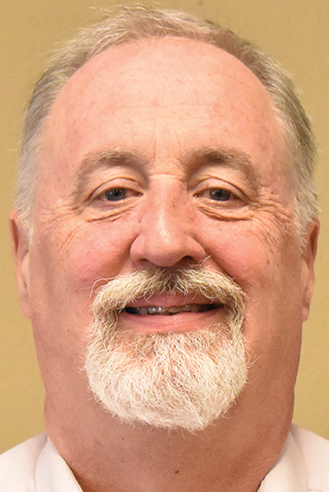
Eric Reece
"Let the word of Christ dwell in you richly; teach and admonish one another in all wisdom; and with gratitude in your hearts sing psalms, hymns, and spiritual songs to God" (Colossians 3:16).
I was serving in Jackson County when I first heard someone sound out a hymn by shaped-note singing. I was fascinated by the knowledge that this is how they sang hymns in the church for generations. I soon learned about The Sacred Harp and how communities would gather for singing schools to learn shape-note singing.
An 11th century monk – Guido of Arezzo – was credited as the first musician to use the do–re–mi–fa–so–la scale to teach music. These sounds were the first notes to a Latin hymn about John the Baptist. Each note was raised by one step.
Around 1790, John Connelly invented the four shape notes in Philadelphia: a right triangle for fa; an oval for sol; a rectangle for la; and a diamond for mi. You did not have to read music: only know the shape and the sound that went with it.
The shape-note system continued to evolve to seven symbols and was introduced in 1801 in the songbook, The Easy Instructor: A New Method of Teaching Sacred Harmony. It was adopted by Benjamin White in 1844 for the first edition of The Sacred Harp.
The Sacred Harp is a rectangular songbook – just the right size to lay in your lap. Currently published in Bremen, Ga., the most recent edition from 1991 says it is, “The best collections of sacred songs, hymns, odes and anthems ever offered to the singing public.”
The Sacred Harp has been in publication ever since, with a rare revision coming this year. The book starts off with 12 pages of the rudiments of music to help the beginner learn this unique system of singing. In the church, each of the groups that sang one of the four parts – alto, bass, treble and tenor – would sit together, each across one another in a square.
The song leader would sing the tune one verse at a time; then, the others joined in. The words of the hymn are sung with everyone singing their part.
Years ago, The Cokesbury Hymnal – which was a favorite in the Methodist Church – and The Baptist Hymnal were both available in round notes or shaped notes. Over time, the shaped-note editions disappeared and only the round-note editions were available.
In the 1960s, there was grave concern that shape-note singing would disappear. The late Quay Smathers of Haywood County kept The Sacred Harp tradition going in Western North Carolina. He taught his children, led singing schools and traveled far and wide to teach classes and workshops. His tireless work was rewarded, as interest grew in keeping this sacred tradition alive.
If you are interested in learning more, the John C. Campbell Folk School in Brasstown will host its annual shape-note singing from 10 a.m. – 3 p.m., Saturday, July 12. The event features an introduction to Sacred Harp music for beginners, followed by singing.
The event is open to the public, with loaner books available for those who are new to shape-note singing.
Eric Reece is the faith columnist for The Graham Star. He is pastor of Robbinsville United Methodist Church and can be reached via email, ereece@wnccumc.net.