

Marshall McClung
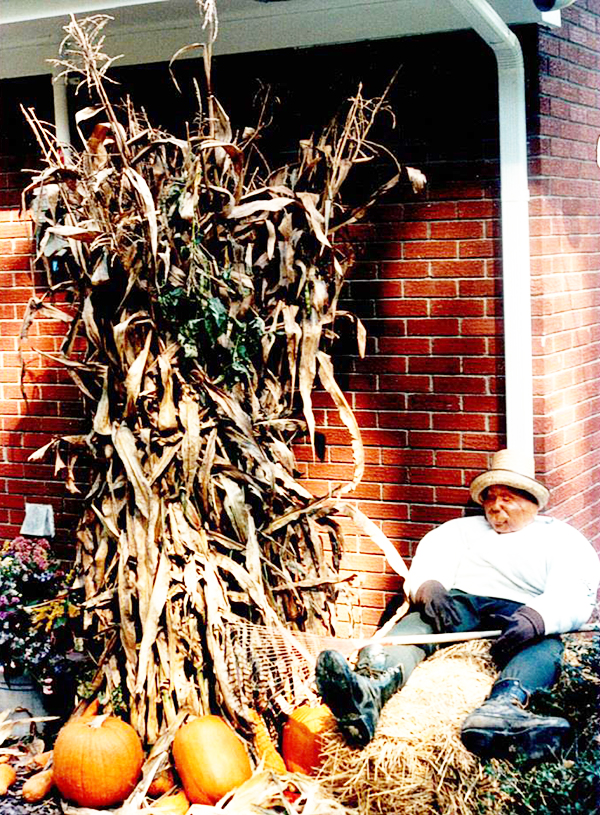
The history of scarecrows dates back as far as 3,000 years to the ancient Egyptians, who used scarecrows made from reeds to scare off flocks of birds – such as quail – from the grain fields.
The Greeks used wooden statues of Priapus – the god of fertility – as scarecrows to protect their crops.
Similar tactics were used by the Romans.
Japan used scarecrows called “Kakshi” in their rice fields. These scarecrows were made from old clothing stuffed with straw to resemble farmers at work in the fields.
The term “scarecrow” first appeared in the English language in the 15th century. European immigrant farmers brought the practice of using scarecrows to protect crops to America, but there is evidence that Native Americans were using scarecrows as far back as the 1600s. Adult men would sit on raised platforms and shout at the intruders. The whites may not have understood their language, but the birds and animals did.
Crows seemed to have been the main culprits, especially in cornfields. Iris Garland said her mother instructed her and her sisters to drop three grains of corn to the hill “one for the mole, one for the crow, and one to grow”.
At least two scarecrows achieved fame. Probably the most well-known one is the scarecrow in The Wizard of Oz, who was in search of a brain. There was also a scarecrow in a story by Nathan Hawthorne, titled “Feathertop.” This short story ended up being a play that made it to Broadway.
Today, commercial farmers especially use noisemakers that sound like gunshots to ward off pests. Scarecrows have for the most part moved from the fields to being part of fall and Halloween decorations.
Fall and Halloween festivals often have scarecrows contests where winners can receive prizes. Some of the larger festivals may have as many as 200 scarecrow entrees and may have several thousand spectators in attendance.
Marshall McClung is the historical columnist for The Graham Star. He is retired from the U.S. Forest Service and can be reached via email, mcclungs@email.com.