

Marshall McClung
Far back in the coves of Graham County are lonely sentinels.
I am speaking of stone chimneys, usually the only thing still standing of what was once a family home place.
I am still amazed of just how far back in the woods some of the early families chose for a building site. Even today – with all our modern modes of travel – it is still a lengthy ordeal to reach them.
Hoot Gibbs and I are committed (some say that we should be) to visiting as many of these old home places as time permits. Some we have been to are miles back in the woods, with no road or trail to them and so overgrown, that it is foot-travel only and sometimes requires crawling on your hands and knees through dense underbrush.
Why did the early settlers go so far back in what can only be described as a wilderness?
The answer to this question involves a study of the nature of mountain people, who are suspicious by nature of anyone they don’t know – especially if they speak with a different accent. This may not be as prevalent as it once was, but it is still present to some extent.
No doubt some were probably hiding from the law, especially if they made a certain beverage known as “moonshine” by some.
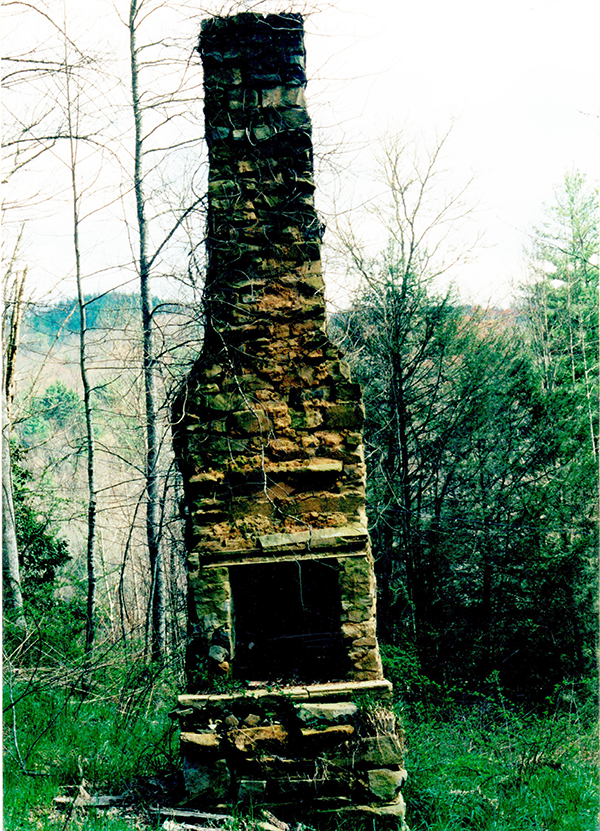
The Civil War also had a lot to do with it. Veterans who fought for the Confederacy wanted far away from Union soldiers who occupied the South for a time after the war ended. One Confederate veteran made the statement that he wanted to get so far back that he would never see another Union soldier or carpetbagger.
He succeeded – in that it was a round trip of two days for supplies from where he settled with his family. It took us a good half-day or more by a four-wheel drive pickup and foot travel to reach this one.
General Sherman’s March through the South was still fresh on people’s minds, with all of the looting and burning of family homes and farm crops and other vicious acts. This caused early settlers in Graham County to get far enough back to evade an Army, should history repeat itself.
This became a way of life for mountain people and was still around when I came along in the 1940s. Raised in a log house on a mountainside, I had little contact with the outside world in my early years.
I hid when someone came to visit, making a beeline for the woods where I felt safe. I would not talk to anyone I did not know and stayed far enough away to where they couldn’t touch me. I was not instructed to be this way by my parents, but it was a sense of self-preservation that I developed at a very early age.
If you ever get to know mountain people – and it may take some time – you will find that they are some of the best people you will ever know.
Marshall McClung is the historical columnist for The Graham Star. He is retired from the U.S. Forest Service and can be reached via email, mcclungs828@gmail.com.