
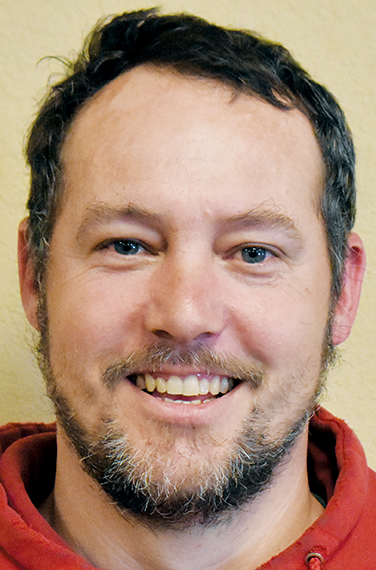
Scott Kamps
New Year’s resolutions remind us how hard it is to improve one’s life.
While nearly 40 percent of Americans make New Year’s resolutions each year, over 80 percent of those resolutions are abandoned by February.
It takes courage to attempt to improve one’s physical, mental and moral being in life; much discipline and hard work is required.
According to expert Susan Weinschenk in Psychology Today (“The Science of Why New Year’s Resolutions Don’t Work”): “Contrary to popular opinion, it’s not hard to change habits IF you do so based on science.”
That sounds about as scientific as six-foot social distancing.
Contrast modern expertise with an old philosopher from around 2,700 years ago. Aristotle wrote, “I count him braver who overcomes his desires than him who conquers his enemies; for the hardest victory is the victory over self,” believing it was easier to defeat external adversaries than to subdue one’s own wants and desires.
I’ll take the wisdom of the pagan sage over the secular ideologue this time, for sure.
If we are honest with ourselves, there’s a myriad of reasons why improving our lives is so difficult. It’s easier to blame others for our “issues” than take responsibility.
No matter our circumstances, we can’t change others: we can only change ourselves. Ever tried giving your spouse a list of New Year’s resolutions you made for him/her?
The biggest reason change (physical or moral) is so hard is because it’s easier to gratify our basest appetites/urges than to “overcome [our] desires.” We naturally gravitate and trend downward in life, accumulating unhealthy habits, and then have to work hard to master our internal impulses. Ever wonder why it works that way and not the other?
If we really lived in the world that Darwinians say we do – that’s evolving and getting better over time (humans have more self-mastery than chimps) – then why don’t we naturally exercise and have to be compelled to be a couch potato?
The biblical answer to this struggle is referred to as original sin. This is the concept that all human beings have inherited a fallen nature from Adam and thus are born with a sin nature of our own. Hence, we naturally gravitate toward our basest desires (laziness over industriousness, gluttony/drunkenness over moderation, etc.).
G.K. Chesterton wrote that original sin is “the only part of Christian theology which can really be proved” because you “see it on the street.” Anybody who has raised children has seen it.
Most parents never teach their offspring to lie, yet they all do it at some point; truth-telling, on the other hand, takes consistent effort to impart to them.
We can also “see it” in our own lives and admit it takes great effort to improve (“the hardest victory”).
While our self-improvement cannot bring redemption, it can enhance our lives and give us more time with loved ones here. This commitment to growth and transformation takes persistence and is commendable; even if it means starting over on your resolutions this month.
Scott Kamps writes a bi-weekly column for The Graham Star. He can be reached via email, thestableguy@frontier.com.