
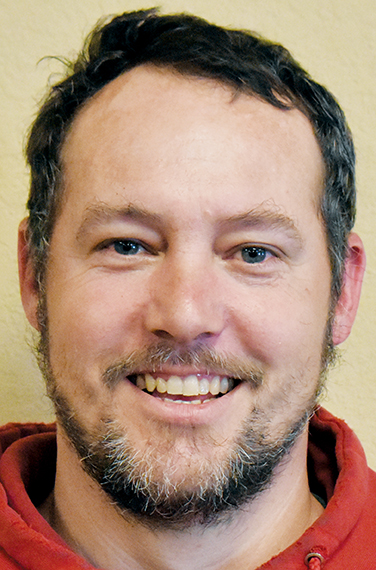
Scott Kamps
To be clear, my gratitude for the Amish and hippies is selective; but I owe both groups much for paving the way for one of my family’s greatest privileges.
Homeschooling is the fastest growing form of education in America. According to an in-depth exposé by the Washington Post (Oct. 31, 2023), homeschool enrollment increased 51% over 2017-22 (private school grew 7% and public school enrollment actually dropped 4%).
The reasons that families are homeschooling are incredibly diverse, as are the places homeschooling’s growing most – the Post piece mentions trends from the Bronx to rural Kentucky.
My family’s been homeschooling for 20-plus years. I like to tell people that I educate my kids traditionally. Most assume a traditional education involves a conventional academic setting, but most of us don’t think traditionally enough. “Public schooling” has been relatively rare throughout history, only becoming “mainstream” around the mid-to-late 1800s. Traditionally, nearly everyone was educated primarily at home.
It’s hard to believe that homeschooling today owes a massive debt to three Amish men who fought against compulsory education laws requiring them to send kids under 16 to public/government school (Wisconsin v. Yoder, May 1972).
Governments have an interest in educating citizens so they can participate intelligently in our political system. Hence, the state of Wisconsin criminally charged the three Amish fathers for not sending their children to public school beyond eighth grade.
Yoder’s lawyer argued that an eighth-grade education was sufficient to prepare them “to read the Bible, to be good farmers and citizens, and to be able to deal with non-Amish people in the course of daily affairs.”
He further argued the Amish society “emphasizes learning by doing, a life of goodness rather than a life of intellect; wisdom rather than technical knowledge; community welfare, rather than competition, and separation from, rather than integration with contemporary worldly society.”
Hence, compulsory formal education would endanger or destroy the free exercise of their religious faith.
Thankfully, the Supreme Court handed down a decision that protects parents in the educational choices we make for our children. “Yoder” reminds us that children are not “mere creatures of the state” – parents have the right to direct their education. This gets messy sometimes, but in politics, as Thomas Sowell has wisely written, “There are no solutions, only trade-offs.”
The trade-offs with educational choice are far superior to compulsory government education.
The contemporary homeschooling movement didn’t begin with the Amish, however; but with the cultural left – the hippies of the 1970s, who called it “unschooling.”
They didn’t want their kids schooled by “the man,” viewing state education as a dehumanizing system that prepped kids to be a cog in the system – rather than blossoming them into “who they really are.”
Soon after Christians, viewing education as parents’ God-given responsibility to shape a certain kind of person, realized they could utilize homeschooling as well.
If education is more about transferring a way of life than getting a job, then it’s difficult to find a better approach than good old-fashioned homeschooling!
Scott Kamps writes a bi-weekly column for The Graham Star. He can be reached via email, thestableguy@frontier.com.