
* Part 6 in a series
On Dec. 7, 1872, the Graham County commissioners met to select a site for the county seat.
Three sites were considered: Rhea Hill, Fort Hill and the land of C.A. Colvard. Rhea Hill was chosen.
There is a legend to the effect that the majority of the residents wanted the town located on Fort Hill, but that the surveyors stopped en route to work to refresh themselves at a still house owned by the people who wanted the town on Rhea Hill. The still house was near the present-day courthouse.
When the surveyors became thoroughly “refreshed,” they emerged from the still house and immediately went to work on that spot locating the court house near a saloon.
First courthouse
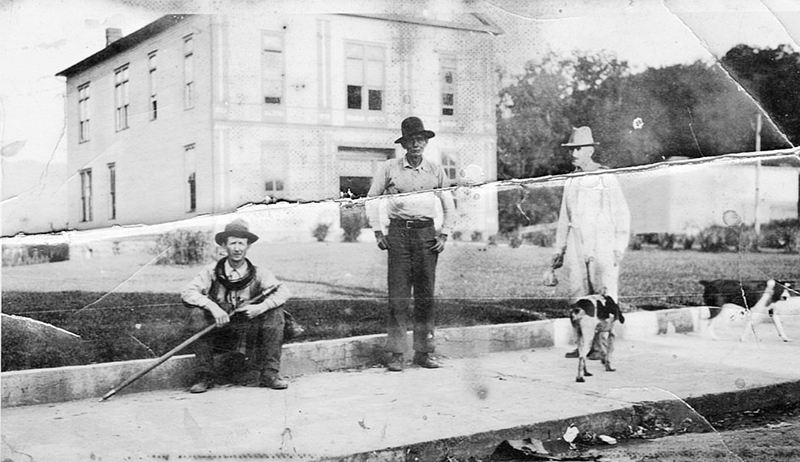
A wooden court house was erected on the northwest corner of the present courthouse site and the first court was held there in the fall of 1874. Sometime thereafter – during a murder trial – the courthouse became so crowded that the floor fell in.
Railroad
The railroad – which has been called the “Empire Builder” – was slow in coming to western North Carolina.
In 1835, a charter was granted to build a railroad from Charleston, S.C. to Cincinnati, Ohio. Asheville, Knoxville and Kentucky were favored as a desired route. Commissioners were selected from North Carolina, South Carolina, Tennessee and Kentucky.
A meeting was called in July 1836, in Knoxville. The financial panic of 1837 struck the Carolinas a hard blow and with the death of Robert Y. Hayne came also the death of the railroad across western North Carolina. After 1852, railroad building continued in North Carolina, but it was in the eastern part of the state.
In 1852, the North Carolina & Western Railroad was incorporated. The railroad was to begin at Salisbury and cross the Blue Ridge Mountains into Tennessee. They chose to cross through Swannanoa Gap. The state legislature authorized a rail to be built down the Little Tennessee River into Tennessee.
In 1859 – after the rail line had been surveyed to Asheville – the state legislature authorized the survey to be continued westward through the valleys of the Pigeon and Tuckasegee Rivers to a point on the line of the proposed Blue Ridge Railroad near Ducktown, Tenn.
This was the initial step toward the construction of a railroad to serve the southwestern counties of North Carolina.
Marshall McClung is the historical columnist for The Graham Star. He can be reached via email, mcclungs@email.com.