
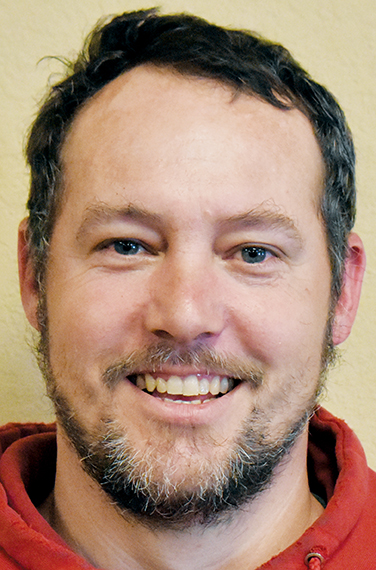
Scott Kamps
Tom Nichols’ “The Death of Expertise” rightly emphasizes the need to avoid the cynical skepticism of experts rampant in our society and strive to humbly learn from others.
The glaring shortcoming of the book is he inadequately addresses the principal reason for the high distrust of experts.
Nichols entertainingly defines a cognitive tendency researched by Dunning and Kruger as the idea “that the dumber you are, the more confident you are that you aren’t actually dumb.”
This study corroborates Darwin’s observation, “Ignorance more frequently begets confidence than does knowledge.”
The vast information the internet provides does seem to put the Dunning-Kruger effect on steroids. People can now read on the internet about any subject and – in ignorance – think they know as much as the experts.
Does this adequately account for the lack of trust in experts? I doubt it. Trust must be earned in families, institutions or societies, and it can be lost.
Trust in leadership is earned when leaders are trustworthy. A leader you can’t trust is no true leader (for a family, church business or nation), even if he can force everyone to do what he wants. When people are convinced that a leader will work solely for their good, they’ll trust him.
If people perceive leaders having selfishly motivated agendas, trust erodes quickly.
Consider what eroded the trust many Americans had in our most well-known bureaucratic expert: Dr. Fauci.
Certainly the polarizing atmosphere of American politics contributed, but was he trustworthy?
On March 8, 2020, Fauci said “there’s no reason to be walking around with a mask.” He changed his position shortly thereafter.
Changing one’s mind is not necessarily untrustworthy. But, that’s not what he said happened.
Later, when asked why he didn’t advise the general public to use masks at first, he said the public health officials “were concerned that it was at a time when personal protective equipment, including the N95 masks and the surgical masks, were in very short supply.”
In other words, he says he lied to accomplish an agenda. Possibly, his agenda was for the public good – not personal gain – but it demonstrated two things: he didn’t always tell the truth and he sought to manipulate American citizens by withholding information from them.
Then he tried to suppress the idea the virus might have originated in a Wuhan lab, the now-infamous “lab leak theory” – evidence continues to mount for a Wuhan lab leak.
As a Protestant Christian, I know enough church history to know when authorities (whether religious or public health) try to suppress people reading for themselves, there’s usually an agenda. And it typically involves money.
Whether Dr. Fauci will be convicted of wrongdoing for any possible role in funding gain-of-function research in China remains to be seen, but he is illustrative of a cancer existing among experts in our day.
Navigating a world of untrustworthy experts to find truth without cynical distrust of all experts takes time and effort, but is required to live honorably today.
Scott Kamps writes a bi-weekly column for The Graham Star. He can be reached via email, thestableguy@frontier.com.